

If you've ever stood in your kitchen holding a bag of gas station ice that's already going soft and slushy in the ten minutes it took you to drive home, you already know something restaurants figured out a long time ago: not all ice is the same. That soft, chewable ice you get at Sonic, at a hospital cafeteria, or at your favorite Mexican place isn't a trick of the fountain machine. It's a completely different shape of ice, made by a completely different kind of machine, and for years those machines were commercial-only, the size of a dishwasher, and required a plumber to install.
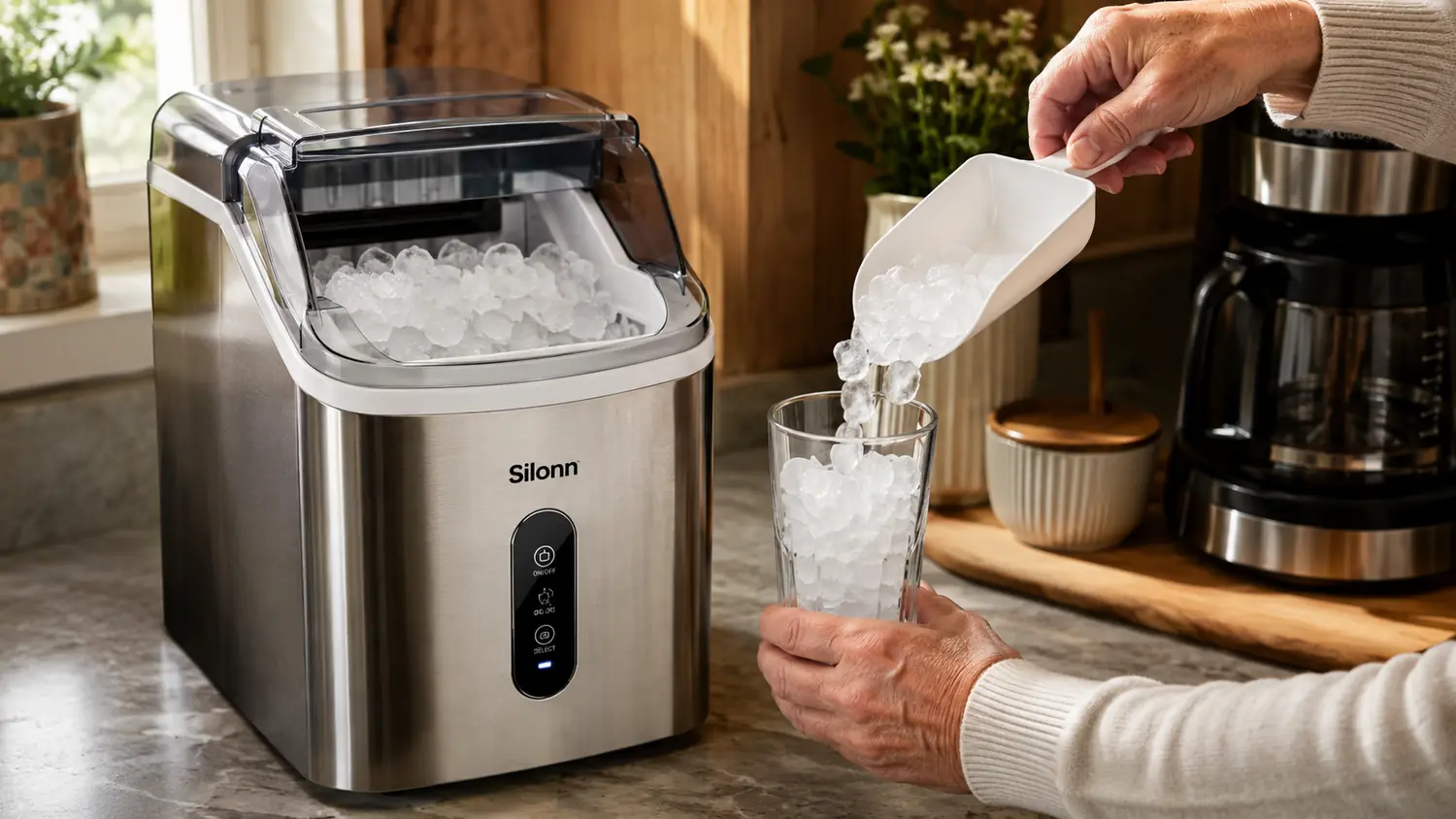
That's changed. I went down this rabbit hole myself after my daughter came home from college raving about the ice at a smoothie shop near her campus. A week later I had a Silonn nugget ice maker sitting on our kitchen counter in Tulsa, right next to the coffee pot, and it's been making that same soft, chewable pellet ice ever since, no plumbing and no special outlet required. This guide walks through the exact five steps to go from a box on your doorstep to a full bin of restaurant-style ice, plus the small habits that keep it tasting clean instead of like plastic.
Stop Making Gas Station Runs for Ice
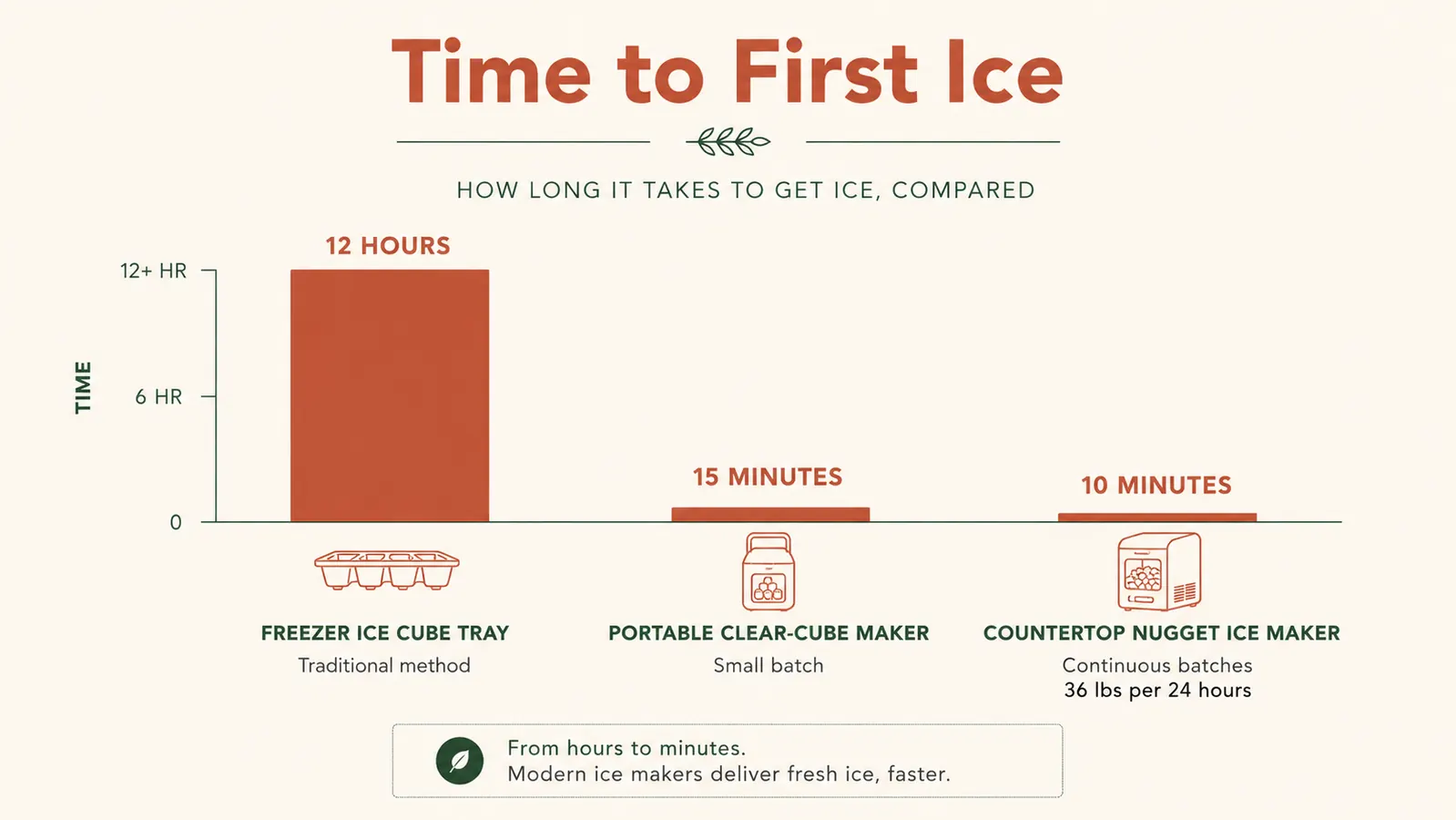
The Silonn Nugget Ice Maker turns ordinary tap water into soft, chewable, restaurant-style ice in about 10 minutes, right on your kitchen counter. No plumbing, no ice cube trays, no more soggy bags from the gas station cooler.
Amazon Check Today's Price on Amazon →Step 1: Pick a Machine Built for Nugget Ice, Not Just Any Ice Maker
The first mistake people make is grabbing whatever "portable ice maker" shows up first in search results. Most of those little countertop units make hard, clear ice bullets, the kind that clatter around in a glass and are murder on your teeth. Nugget ice, sometimes called pellet ice or chewable ice, is soft and porous. It's made by compressing shaved ice flakes into small cylinders instead of freezing water solid around a metal finger, which is why it crunches easily and soaks up the flavor of whatever you pour over it.
The Silonn nugget ice maker is built specifically for this style of ice, and it's the one I settled on after comparing half a dozen countertop options. It turns out about 36 pounds of ice in 24 hours, which sounds like a lot until you realize it's producing in small batches roughly every 10 minutes rather than all at once. The unit sits about the size of a large coffee maker on our counter, holds close to 3 pounds of finished ice in the storage bin at a time, and runs on a standard household outlet. No drain line, no water line, nothing a landlord or an HOA would blink at.
It's also worth reading actual owner feedback before you buy, not just the glossy product photos. Thousands of people have run this exact machine daily for months, and the pattern in their reviews lines up with what I've experienced: reliable ice output, an easy-to-follow control panel, and a footprint small enough for an apartment, a camper, or a home office wet bar. If your kitchen is tight, that matters as much as the ice quality itself.
Step 2: Give It the Right Spot on Your Counter
Where you put the machine matters more than most people expect. Nugget ice makers work by compressor, and compressors work harder, and slower, in hot air. Ours originally sat next to the stove, and I noticed it took longer to fill the bin on days I'd been cooking. I moved it to the far counter near the coffee station, away from the oven and out of direct afternoon sun through the kitchen window, and the difference in output was noticeable within the first week.
Leave a few inches of clearance behind and on the sides of the machine so the vents can breathe, and set it on a flat, stable surface since it does vibrate slightly during the ice-making cycle. You'll also want it somewhere you don't mind topping off with water every day or two, since these machines pull from an internal reservoir rather than a plumbed line. I fill ours straight from a water filter pitcher we already had in the fridge door, which takes about fifteen seconds and means the ice never tastes like our tap water, which runs a little mineral-heavy here.
Plug it directly into a wall outlet rather than a power strip or a long extension cord if you can help it. Compressor appliances draw more current on startup than the running wattage suggests, and a cheap extension cord can trip a breaker or, worse, overheat. If your counter setup means you have to run a cord, use a short, heavy-gauge one rated for kitchen appliances, not the thin ones meant for lamps.
Step 3: Run the Break-In Cycle Before You Trust the Ice
Every nugget ice maker ships with a bit of manufacturing residue in the lines and bin, so the first batch or two of ice will taste faintly of plastic no matter how clean the machine looks out of the box. Before making anything I planned to drink, I rinsed the removable ice bin and scoop by hand, filled the reservoir with filtered water, and ran the machine through two full cycles, dumping both batches down the drain instead of into a glass.
The Silonn has a self-cleaning function built into the control panel, and I ran that once before the first real batch too, just to flush the internal lines with a proper cleaning cycle rather than plain water. It takes about ten minutes and you don't have to do anything but press the button and walk away. By the third batch, the ice tasted like nothing but cold water, which is exactly what you want. If your tap water is especially hard, stick with filtered water going forward. It's a small habit that keeps mineral buildup from forming inside the machine in the first place.
Once you're past the break-in batches, do a real side-by-side taste test. Fill one glass with ice from the machine and one with cubes from your freezer tray, add the same drink to both, and give it a few minutes. The nugget ice will still be crunchy and soft at the point your regular cubes have barely started to sweat. That's the moment it clicks why restaurants bother with this shape of ice in the first place.

Step 4: Keep the Bin Full for Continuous Restaurant-Style Output
Here's the part nobody explains in the marketing photos: the machine doesn't just fill up once and sit there. It cycles roughly every 10 minutes, dropping a fresh batch of nugget ice into the bin, and a sensor tells it to pause once the bin is full. If you want a steady, restaurant-style supply going through the day, especially if you're having people over, the trick is to keep scooping ice out as you use it rather than letting the bin sit full and idle for hours.
Any ice that melts in the bin drains back down into the water reservoir automatically, which is a nice touch, but it also means the reservoir empties faster than you'd think on a busy day. During a cookout last summer I had eight people filling cups off the counter for a few hours straight, and I ended up topping off the water reservoir twice to keep the cycles going. Keep a pitcher of filtered water nearby on days you expect heavy use, the same way a restaurant keeps its ice machine's supply line flowing without a second thought.
For everyday use, one household rarely empties the bin faster than the machine can refill it, which is the whole point. But if you know a holiday gathering or a graduation party is coming, start the machine running a few hours early and let ice bank up in a separate cooler once the bin is full, the same trick I use before every big get-together now instead of making a last-minute ice run.
Step 5: Clean It on a Schedule So the Ice Stays Restaurant-Quality
Restaurant ice machines get professionally cleaned on a set schedule, and yours needs the same treatment, just on a much smaller scale. I run the Silonn's self-clean cycle about once a week, and I wipe down the storage bin and scoop with warm soapy water on the same day, since that's where hands and countertop dust end up over time. It takes maybe five minutes total and it's the single biggest reason our ice still tastes clean six months in.
About once a month, or more often if you're in a hard water area like we are, run a deeper descaling cycle using a mix of water and food-safe citric acid or white vinegar in the reservoir instead of plain water, then flush it twice with fresh water afterward so nothing sour carries into your drink. If you know you won't use the machine for more than a week or two, such as during a trip, unplug it, empty the reservoir and bin completely, and leave the lid open so it dries out instead of sitting damp.
If the machine ever slows down or stops producing ice altogether, check the water level and the cleanliness of the reservoir before assuming something's broken. Nine times out of ten with any nugget ice maker, a sluggish cycle traces back to mineral scale buildup or a reservoir that's run low, not a mechanical failure. A proper descale cycle usually clears it right up.
What Else Helps
A few small things make the restaurant-ice experience feel complete once the machine itself is dialed in. A basic pitcher-style water filter upgrades the taste noticeably if your tap water has any mineral edge to it, and it's a lot cheaper than bottled water in the long run. Good insulated tumblers keep the nugget ice from melting as fast once it's in your glass, since the soft, porous texture that makes it chewable also means it melts a touch quicker than dense clear cubes. And skip the metal ice pick or spoon on the storage bin. A plastic scoop, like the one that comes with most nugget makers, won't scratch the interior or introduce stray metal flavor over time.
Once you've got a steady supply, it's worth using it for more than a glass of soda. Nugget ice is what a lot of sweet tea and lemonade recipes were built around in the South, and it's the reason blended coffee drinks and smoothies come out smoother when you start with it instead of standard cubes. Keep the bin full through the afternoon and you'll find yourself reaching for it in drinks you never used to bother chilling at all.
The difference between good nugget ice and great nugget ice usually isn't the machine. It's the water you feed it.
Ready for Ice That Doesn't Melt in the Cooler on the Drive Home
Once you've got the setup right, the Silonn Nugget Ice Maker turns into one of those countertop tools you use every single day without thinking about it. Filtered water in, soft chewable ice out, in about the time it takes to unload the dishwasher.
Amazon See Current Price and Availability →