

I bought the OXO Good Grips mandoline slicer back in January, mostly out of frustration. I'd just spent the better part of an hour hand-slicing potatoes for a scalloped potato casserole for twelve people, and by the time I finished, my wrist ached and half the slices were thick on one end and nearly see-through on the other. Six months and roughly 40 pounds of potatoes, onions, cucumbers, and zucchini later, I can tell you exactly where this OXO tool earns its spot in my kitchen drawer, and exactly where it falls short.
This isn't a rental unit or a one-week trial. It's been through Sunday coleslaw, holiday scalloped potatoes, weeknight cucumber salads, and one memorable batch of homemade potato chips that didn't survive past dinner. I've also nicked myself once, which is entirely on me for skipping the hand guard on a Tuesday when I was in a hurry, and that mistake is exactly why the safety section below isn't an afterthought. It's the most important paragraph in this whole review, so read it even if you skim the rest.
The Quick Verdict
A genuinely time-saving prep tool for anyone who slices vegetables often, as long as you respect the blade and never skip the hand guard.
Amazon Check Today's Price →Tired of Uneven Slices and a Sore Wrist?
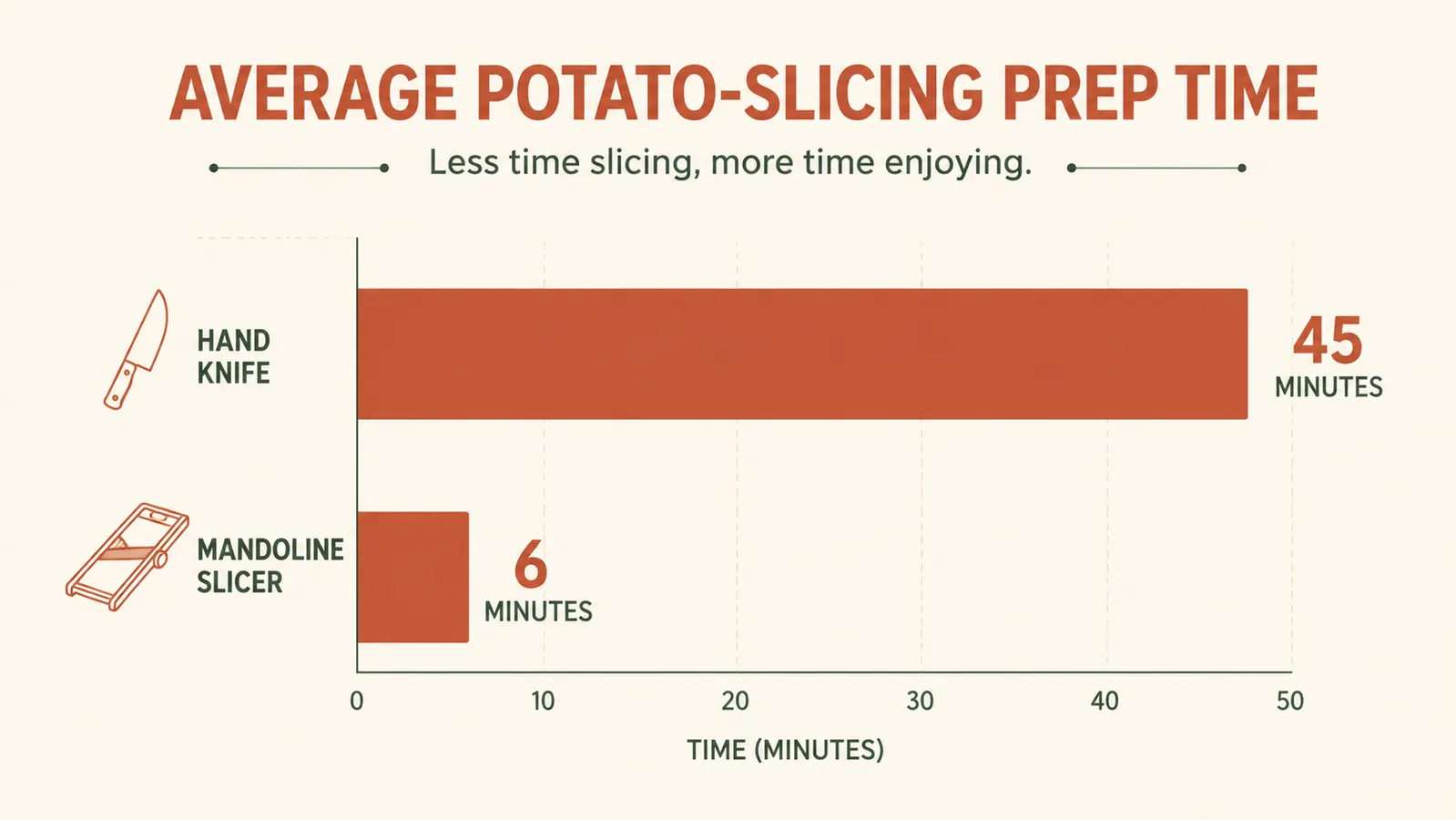
The OXO mandoline turns a 45-minute knife job into about 6 minutes, with slices thin and even enough to actually impress your dinner guests.
Amazon Check Today's Price on Amazon →How I've Used It
Over six months, I used the OXO mandoline roughly twice a week, sometimes more around holidays. It handled the everyday stuff first: potatoes for scalloped potatoes and homemade chips, red onions for taco night, cucumbers for a vinegar salad my late husband used to request every summer, and zucchini for a batch of ratatouille I make in bulk and freeze in portions. I ran it on all three of its main slice settings, the adjustable blade goes from a whisper-thin sixteenth of an inch up to about a quarter inch, and used the julienne insert twice, once for carrots and once for a disastrous attempt at matchstick cucumbers that taught me the insert needs a very firm vegetable to work well.
The handheld design took some getting used to. Unlike countertop mandolines with a stand and ramp, this one sits directly over a cutting board or bowl and you push the vegetable across the blade by hand, guided by the plastic food holder. Once I got the rhythm down, probably by the third use, it became second nature. My thumbs get stiff on some mornings, and on those days the mandoline is genuinely easier on my hands than gripping a chef's knife for twenty minutes straight.
The dish that actually converted me was a gratin I made for my daughter's birthday in March. I sliced two pounds of potatoes and one large onion in under ten minutes total, and every slice was close enough in thickness that the whole dish cooked evenly, no raw center, no burnt edges. My daughter asked how I got the layers so uniform, and I'll admit I let her think it was skill for about thirty seconds before I told her it was a simple kitchen tool doing most of the work. That's the moment I stopped thinking of the mandoline as a novelty gadget and started treating it as a permanent part of how I cook.
The Adjustable Blade, and Why the Settings Actually Matter
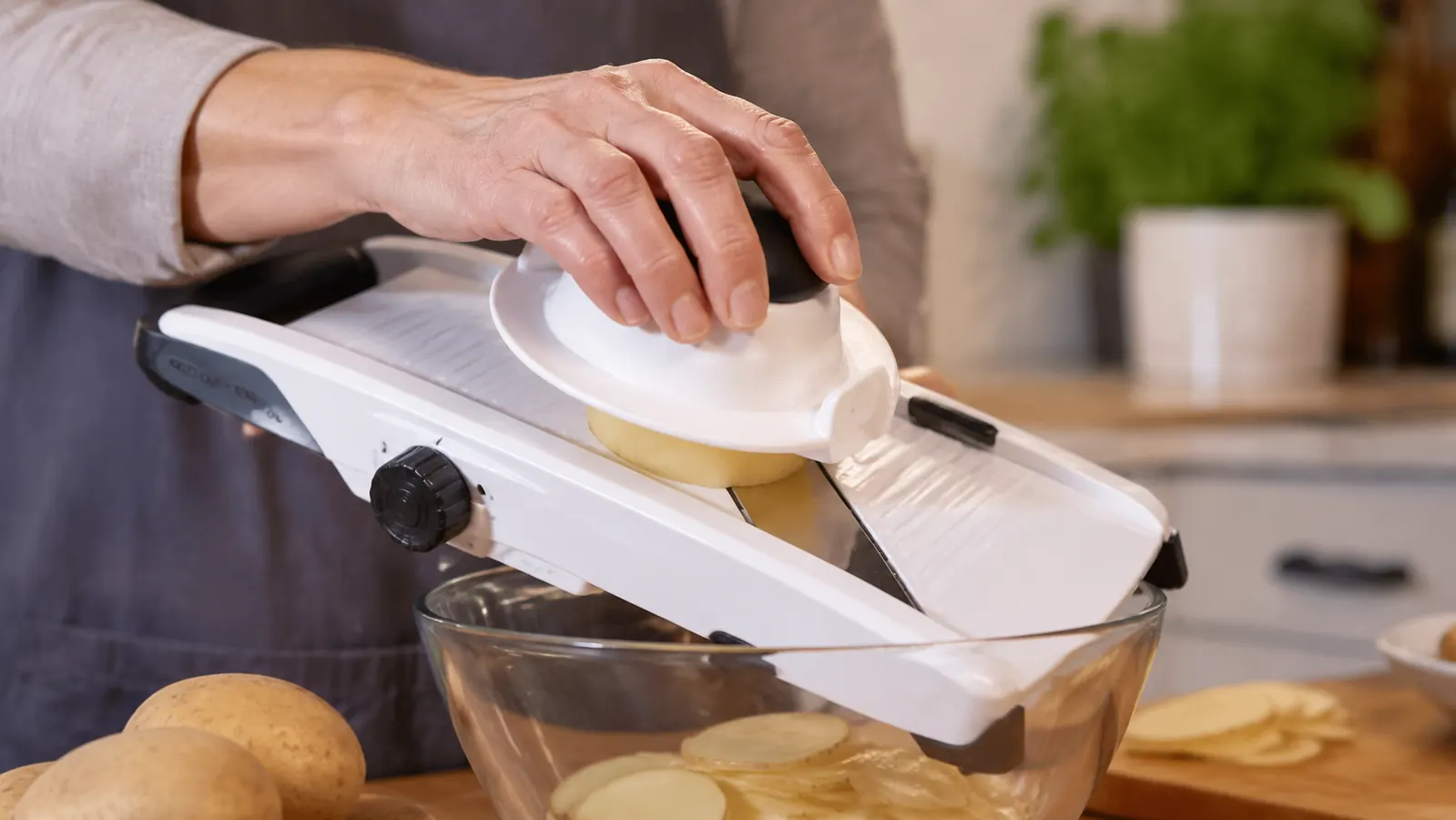
The whole appeal of the OXO mandoline is the dial on the side that adjusts blade thickness in small increments. Turn it one way for paper-thin cucumber rounds you can practically see through, turn it the other way for thicker chip-style potato slices that hold up to baking. I use the thinnest setting for cucumbers, the thickest for potatoes going into the oven, and the middle range for onions I want in a slaw. Once you land on your usual settings for the dishes you make most, resetting the dial takes about two seconds.
The blade itself is stainless steel and stayed sharp through the entire six months, which surprised me. I'd read complaints about cheaper mandolines where the blade dulled within a few uses, but this one sliced through a firm russet potato in month six about as cleanly as it did in month one. I never sharpened it, and OXO doesn't really design it to be sharpened at home anyway. When it eventually dulls, which at my rate of use is probably still a year or two out, replacement will be the plan rather than sharpening.
The plastic food holder that comes with it has small teeth that grip the vegetable so your fingers stay clear of the blade. It works well on firm, blocky vegetables like potatoes and zucchini. It works less well on something round and slippery like a whole cucumber, which tends to want to roll inside the holder. I've learned to slice cucumbers in half lengthwise first so there's a flat surface for the holder to grip.
The Julienne Insert, and What It's Actually Good For
The julienne insert snaps in over the regular blade and cuts thin matchstick strips instead of flat rounds. It's a nice extra rather than a core feature, and I probably reach for it once a month, mostly for carrots I'm adding to a slaw or a stir fry. On a firm, straight carrot it produces clean, even matchsticks in a fraction of the time a knife would take, and the strips come out consistent enough that they cook evenly together.
Where the julienne insert falls apart is on anything with much give to it. My attempt at matchstick cucumbers turned into mush at the ends, and zucchini needed to be very fresh and firm or it did the same thing. I've since settled on using the insert only for carrots and the occasional firm daikon radish, and reaching for a knife for anything softer. It's a genuinely useful attachment for the right vegetable, just not the all-purpose tool the packaging kind of implies it is.
The Safety Habit I Never Skip Anymore
Here's the part every mandoline review should lead with, and most bury at the bottom: this thing is genuinely sharp, sharp enough that a moment of carelessness will cut you, and it will not feel like a paper cut. The one time I got nicked was the one time I decided the hand guard was in the way and tried to slice the last inch of a zucchini by hand instead. I caught the edge of my thumb. It healed fine, it wasn't serious, but it was a clear enough reminder that the guard exists for a reason and skipping it to save fifteen seconds isn't worth it.
Since then my rule is simple and non-negotiable: the food holder goes on before the blade comes out of the box, every single time, no exceptions for just one more slice. When a vegetable gets too small to hold safely, even with the guard, I stop and finish it with a knife instead. That last inch or two of a cucumber or zucchini just isn't worth the risk. If you have grandkids or anyone unfamiliar with mandolines in the house, this is worth saying out loud before they ever pick it up, and it's worth keeping the blade guard on when the tool isn't actively in use in your hand.
How It's Held Up After Six Months of Regular Use
Beyond the blade holding its edge, the rest of the tool has aged well. The plastic frame hasn't cracked or warped, even though it's gone through the dishwasher's top rack more times than I can count. The adjustable dial still clicks firmly into each setting instead of sliding loose, which was one of my worries going in since I've owned cheaper slicers where the dial wobbled within weeks. The non-slip feet on the bottom still grip a cutting board well, though they've picked up some staining from beet juice that no amount of scrubbing has fully removed.
Cleanup takes maybe two minutes. I rinse it immediately after use, before starch or juice has a chance to dry onto the blade, then either hand wash it or run it through the dishwasher. I keep the blade guard on during storage in the drawer, which has kept it from nicking anything else in there, including my hand when I'm digging around for a spatula.

Where It Struggles
It's not perfect. Soft vegetables like ripe tomatoes turn to mush more often than not, since the blade tends to squash rather than cleanly slice something without much structure. Anything oddly shaped, like a knobby heirloom carrot or a bell pepper, doesn't sit well in the food holder and needs to be trimmed into a more uniform shape first, which adds a step. And the handheld design means you need a steady cutting board or bowl underneath. On a wobbly counter or with slippery hands, I wouldn't trust it nearly as much as I trust it on my regular setup.
I looked at a couple of countertop mandolines with a stand and ramp before buying this one, and honestly, for someone with a smaller kitchen and limited storage, the handheld design wins. It stores flat in a drawer instead of taking up cabinet space. If I cooked for a restaurant-sized crowd every night, I might feel differently, but for regular home cooking, handheld has been the right call for me.
I also thought about the slicing disc on my old food processor before buying this. The food processor disc is faster for huge batches, but it's louder, it's another appliance to haul out and wash in three pieces, and the results were never as consistent since the vegetable can shift around inside the feed tube. For the amount I actually cook on a normal week, the mandoline is quicker to grab, quicker to clean, and gives me more control over exactly how thin each slice comes out.
What I Liked
- Adjustable blade stayed sharp through six months of regular use
- Compact enough to store flat in a drawer
- Cuts potato prep time from 45 minutes to about 6
- Dishwasher safe and easy to rinse clean
- Multiple thickness settings cover most home recipes
Where It Falls Short
- The blade is genuinely sharp and demands full attention every time
- Round or slippery vegetables like whole cucumbers can roll in the food holder
- Not a good fit for soft, ripe tomatoes
- The last inch or two of any vegetable still has to be finished by hand
- The julienne insert only works well on firm vegetables like carrots
The mandoline didn't just save me time, it saved my wrist. I just had to learn to respect the blade first.
Who This Is For
This is a good fit for anyone who slices vegetables regularly, whether that's weekly coleslaw, holiday scalloped potatoes, or batch meal prep for the freezer. It's especially useful if knife work has gotten harder on your hands, wrists, or shoulders over the years. Retired home cooks who host big family dinners a few times a year but cook smaller portions the rest of the time will get real use out of this, since it handles both scales well. If you already know you'll use it at least once a week, it earns its keep fast.
Who Should Skip It
If you rarely cook vegetables that need slicing, or you're not comfortable using a sharp blade with the discipline the hand guard requires, this probably isn't worth the drawer space. Households with young kids who might grab it out of curiosity should also think carefully about storage, since the blade stays sharp even when it's sitting unused. And if most of your cooking involves soft produce like tomatoes and avocados rather than firm vegetables, a good chef's knife will honestly serve you better. There's no shame in that. Not every tool fits every kitchen, and this one only pays off if you're already slicing vegetables often enough to feel the difference.
Ready to Cut Your Prep Time to Under 10 Minutes?
Six months in, the OXO mandoline is still the fastest, most consistent way I slice vegetables at home, as long as you respect the hand guard.
Amazon Check Today's Price on Amazon →