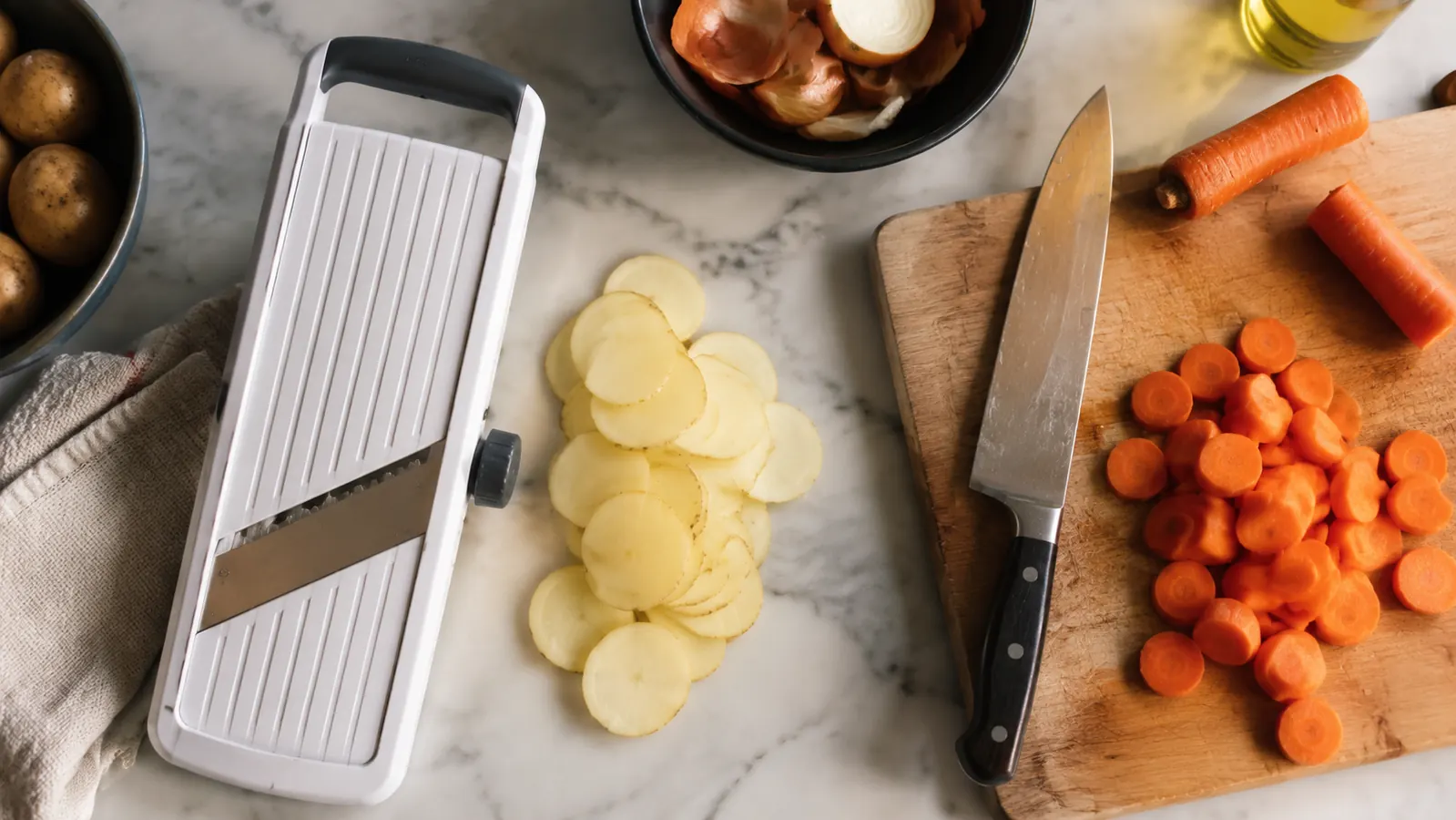
I own a good chef's knife. I've had it for close to fifteen years, keep it sharp, and know how to use it. I also own an OXO Good Grips Large Adjustable Handheld Mandoline Slicer that's been living in my utensil drawer for about a year now. Last Saturday I set both tools on the counter next to three pounds of Yukon Gold potatoes, a bag of carrots, and two English cucumbers, and I timed myself prepping all of it twice, once with the knife I've trusted for years, once with the mandoline. I wanted a real answer, not a guess, to the question I get asked most whenever someone spots the mandoline drying by my sink: do you actually need this thing, or is a sharp knife enough?
The short answer is that the OXO mandoline won on speed and consistency every single time, and it wasn't close. But a knife still does things the mandoline flat out can't, and I'll get into exactly where it earns its keep further down. Below is the honest breakdown, timed and measured on my own counter, not the version where one tool gets crowned perfect and the other gets thrown out.
I want to be upfront about something before the numbers start. I'm not getting rid of my knife, and I'm not telling you to either. What changed for me is which tool I reach for first depending on the job. For fifteen years the answer for slicing vegetables was automatic, knife, no question, because it was the only tool I owned that did the job. These days it's automatic in the other direction for anything I'm slicing in volume, and the reasons why turned out to be pretty specific once I broke them down side by side with a timer running.
| Factor | OXO Good Grips Mandoline | Chef's Knife |
|---|---|---|
| Time to slice 5 potatoes into 1/8-inch rounds | 1 minute 40 seconds, guard and all | 6 minutes 15 seconds, and thickness drifted toward the end |
| Slice consistency | Every slice identical thickness, dial-adjustable from paper-thin to 1/4 inch | Varies with hand fatigue, gets less even as the pile gets bigger |
| Learning curve | Ready to use correctly in under a minute, no practice needed | Takes months, sometimes years, to get truly even freehand cuts |
| Best for | High-volume slicing: gratins, chips, slaws, quick pickles | Dicing, mincing, and cuts a flat carriage tool can't make |
| Safety | Finger guard required and included, still nicks fingers if skipped | No guard, but the slower pace means fewer surprise slips |
| Storage | Folds flat, about an inch thick, fits in a drawer | Needs a block, magnetic strip, or sheath, plus regular honing |
| Versatility | One tool, three julienne blade angles, six thickness settings | One tool, handles every cutting task including ones the mandoline can't |
Where the OXO Mandoline Wins
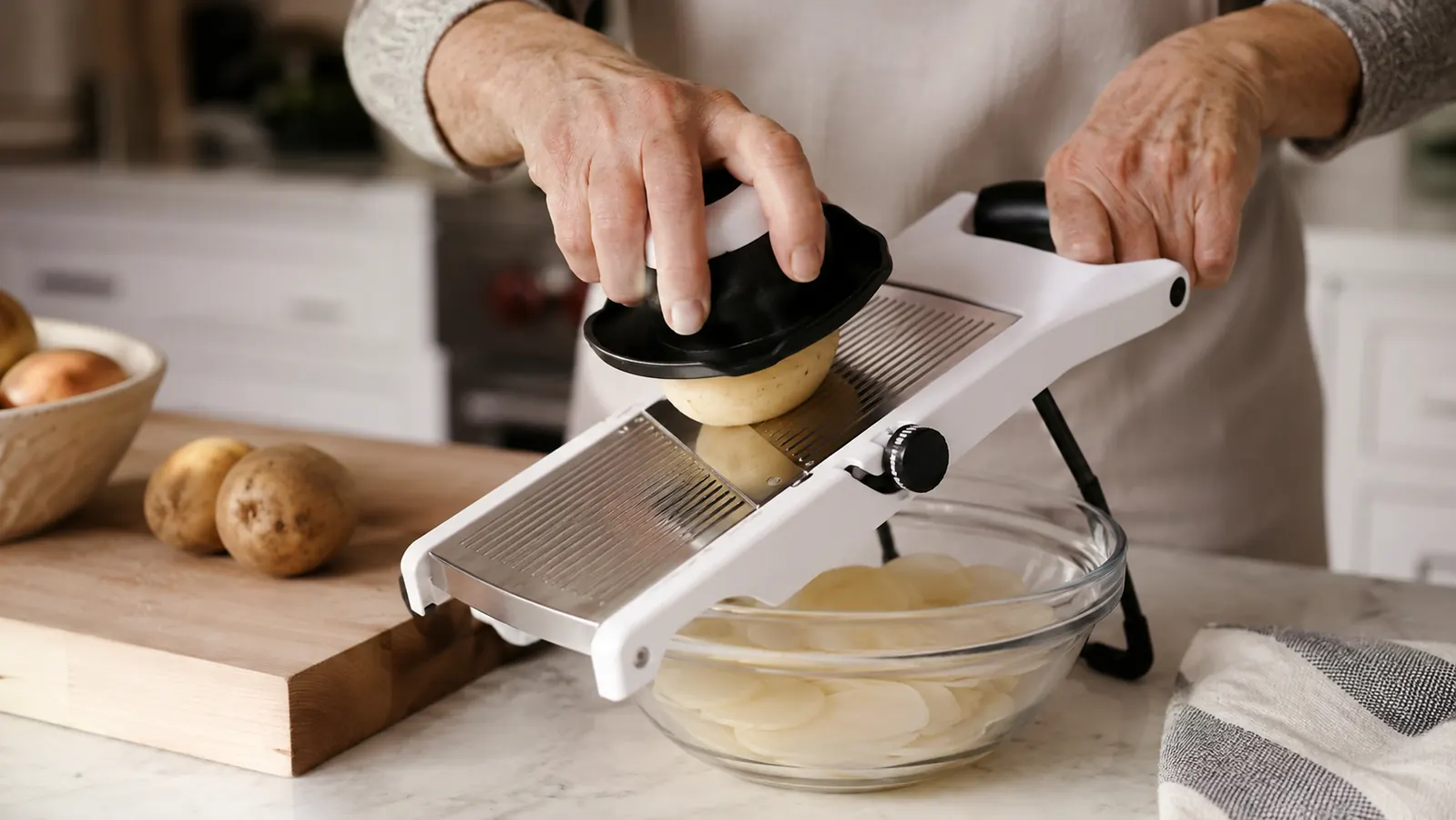
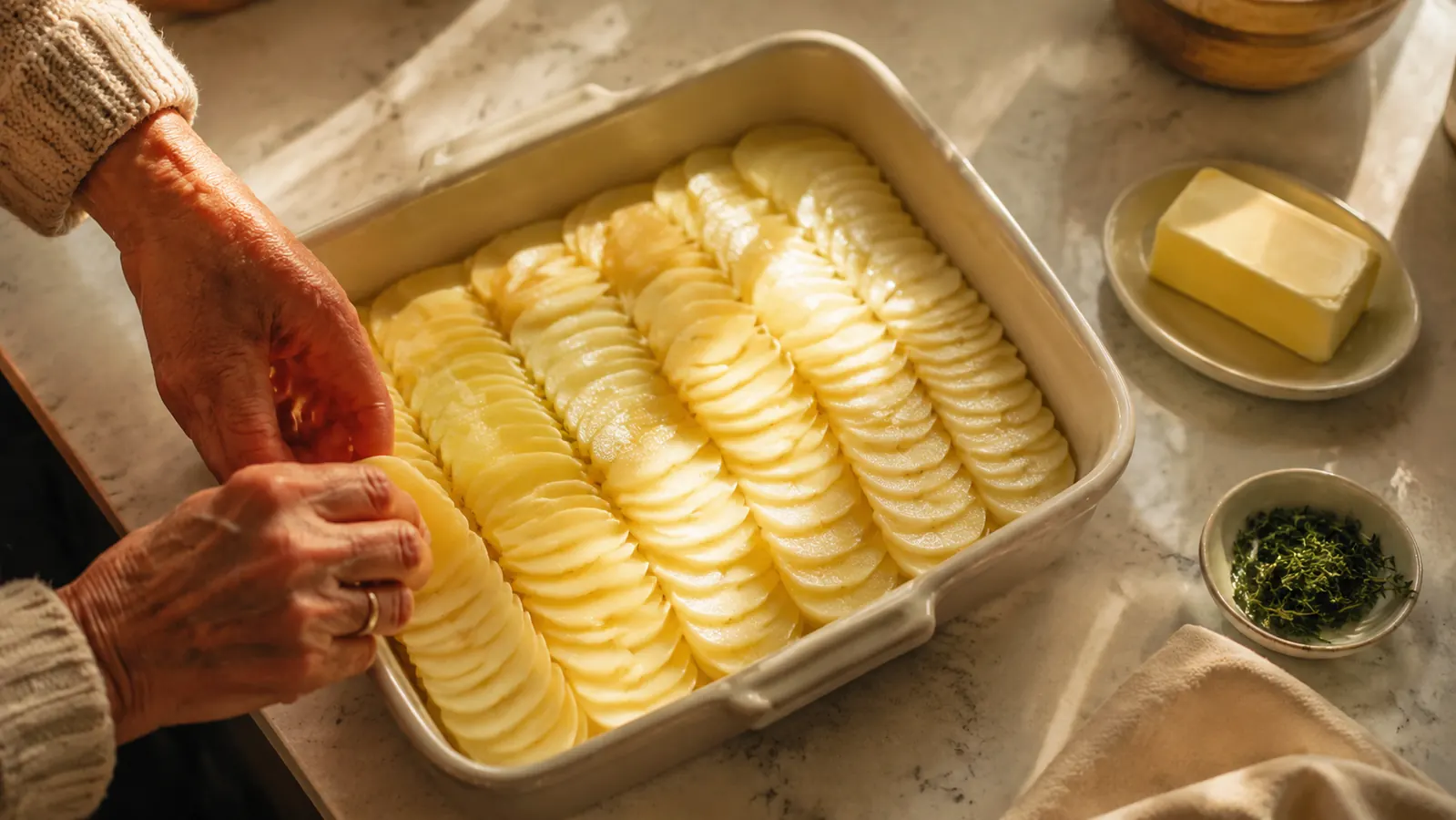
The number that actually surprised me was the potato test. Five medium Yukon Golds, sliced into 1/8-inch rounds for a gratin, took 1 minute 40 seconds with the mandoline, guard and all. With the knife, aiming for that same thickness, it took 6 minutes 15 seconds, and by the last potato my rounds were noticeably thicker than my first, because my wrist was tired and I was rushing to keep pace. The mandoline doesn't get tired. Slice two potatoes or slice twelve, the thickness dial holds the exact same setting the whole way through.
Consistency matters more than most people think when you're actually cooking, not just plating something for a photo. Uneven potato slices in a gratin cook unevenly, some pieces mushy, some still firm twenty minutes after the rest are done. When I pulled the mandoline-sliced gratin out of the oven, every layer had cooked at the same rate, top to bottom. The knife-sliced version needed another twelve minutes in the oven because the thicker slices near the middle were still firm while the thinner ones were already going soft.
Cucumbers for a batch of quick pickles told the same story. Two cucumbers, sliced into thin coins for the jar, took 45 seconds on the mandoline and just under 3 minutes with the knife, and the mandoline coins were thin enough to actually turn crisp-tender in the brine within a day instead of staying stubbornly raw in the center the way the thicker knife-cut pieces did. When I'm prepping in volume, whether that's a full sheet pan of zucchini chips or a big bowl of coleslaw for a potluck, the time gap only gets wider the more vegetables are in the pile.
The thickness dial is the other piece that made a real difference once I actually used all six settings instead of leaving it wherever it landed. Paper-thin for cucumber pickles, a middle setting for gratin potatoes, thicker for oven fries that hold their shape, all without switching tools or second-guessing my knife work. The mandoline also came with three interchangeable julienne inserts, which turned a bag of carrots into matchstick strips for a slaw in about ninety seconds, a cut that would have taken me a solid ten minutes with a knife and still come out uneven at the ends.
Where the Chef's Knife Wins
The mandoline is a one-trick tool, and it's a genuinely good trick, but it's still one trick. It slices flat, roughly uniform pieces. It doesn't dice, mince, or break a whole onion down into the small even pieces a soup base needs. For that kind of prep, the knife is faster and safer, because you're working with a round, irregular vegetable instead of trying to force it flat against a carriage it was never shaped for.
The knife also wins on anything irregular in shape. Trimming the woody end off asparagus, cutting a chicken breast into strips, breaking a head of cauliflower into florets, none of that works on a mandoline, and trying to force it usually ends with a trip to the bandage drawer instead of the guard drawer. If a vegetable isn't roughly flat and roughly small enough to fit the mandoline's carriage, the knife is the only real option on the counter, and no amount of blade adjustment changes that.
There's also a category of prep the knife handles that has nothing to do with vegetables at all. Herbs, garlic, proteins, bread, none of that belongs anywhere near a mandoline's blade, and a good knife moves through all of it without a second thought. If you cook a wide variety of dishes rather than large batches of one vegetable at a time, the knife stays the tool you reach for most often, and the mandoline becomes the specialist you pull out for the specific jobs it happens to be built for.
Still spending six minutes on potatoes a mandoline handles in ninety seconds?
The OXO Good Grips Mandoline slices in uniform, adjustable thicknesses every single time, no knife skills required. Check today's price and current availability on Amazon before your next big prep day.
Amazon Check Today's Price on Amazon →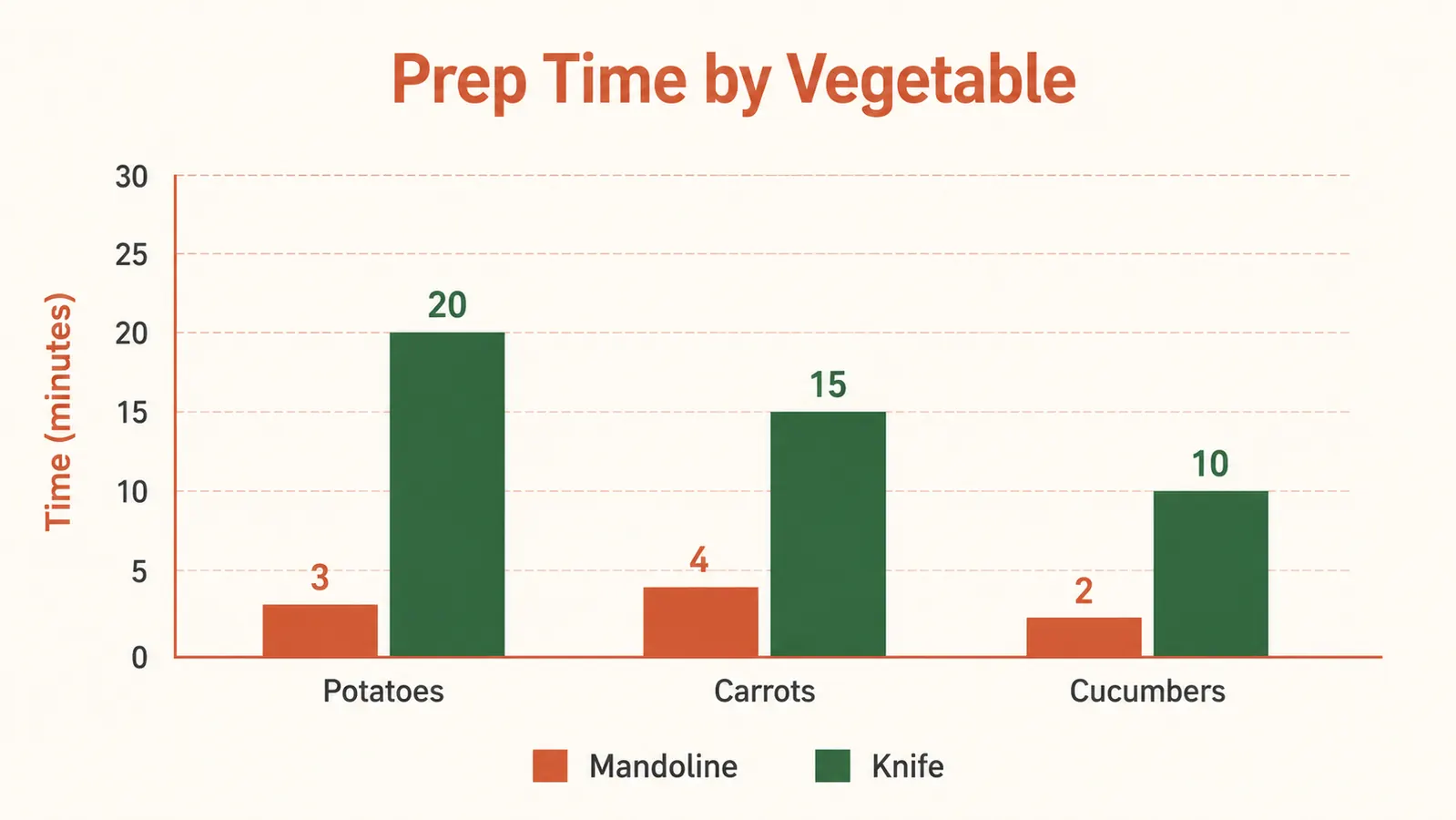
Learning Curve: How Long Before You're Actually Fast
This is the part that gets skipped in most comparisons, and it's the part that actually matters most for anyone who isn't already a confident cook. My knife skills took years to build, not days. Even now, after fifteen years of practice, my slices get less even the longer I'm at it and the more tired my wrist gets. That's not a flaw in the knife, it's just what freehand cutting is. It rewards practice, and it punishes fatigue every single time, no matter how long you've been doing it.
The mandoline erased that learning curve almost entirely. The first time I used it, before I'd read a single instruction beyond attaching the food holder, my slices came out just as even as they do now, a year later. There's no technique to master, no wrist angle to get right, no years of practice standing between you and a pile of evenly sliced potatoes. For anyone who's been putting off cooking a dish because the prep felt like more work than the payoff, that's the real advantage, not the stopwatch numbers, the fact that day one and day one hundred look the same.
Safety and Cleanup, the Parts Nobody Mentions
The mandoline's blade is exposed and it is genuinely sharp, sharper than most people expect the first time they use one. The included finger guard exists for a reason, and I use it every single time, no exceptions, even on a vegetable that feels too small to bother. The one time I got careless and tried to finish a potato without it, I got a shallow nick that healed in a few days but taught me the lesson permanently. Respect the guard and the mandoline is no more dangerous than any other kitchen tool. Skip it, even once, and it will remind you why it's there.
Cleanup favors the mandoline too, in a smaller way than I expected going in. It rinses off quickly by hand, dries flat, and folds down to about an inch thick for drawer storage, no oiling, no honing, no dedicated block taking up counter space. The knife needs a quick wash, a dry, and every few months a trip across a honing steel or a whetstone to stay sharp enough to actually earn its keep. Neither routine is a burden once it's a habit, but the mandoline's is shorter, and after a big prep session that matters more than it sounds like it should.
Who Should Buy Which
If you cook vegetables in volume, holiday potato gratins, weekly meal-prep slaws, a full batch of zucchini chips for the dehydrator, the OXO mandoline earns its drawer space fast. It's also the better pick if your hands don't move the way they used to, since the guided carriage does the steadying work your wrist used to have to do on its own. If most of your cooking is one onion, one clove of garlic, a chicken breast for two people, you already own the right tool in the knife sitting in your block. Most kitchens I've seen, including mine, end up keeping both and reaching for whichever one actually matches the job in front of them that day.
If you're still deciding, think about your actual week, not the cooking show version of it. If you're regularly slicing more than two or three vegetables at a sitting, prepping for a crowd, or you've caught yourself skipping a dish because the knife work felt like too much for a weeknight, the mandoline solves a real problem your knife was never built to solve quickly. If your prep is mostly small, mixed, and irregular, keep leaning on the knife, and let the mandoline sit ready in the drawer for the days it's actually the right tool for the job.
See the slicer that cut my potato prep time by more than two-thirds
Uniform slices, adjustable thickness, and no years of practice required. Check today's price and current availability on Amazon before your next gratin, slaw, or pickle batch.
Amazon Check Today's Price on Amazon →