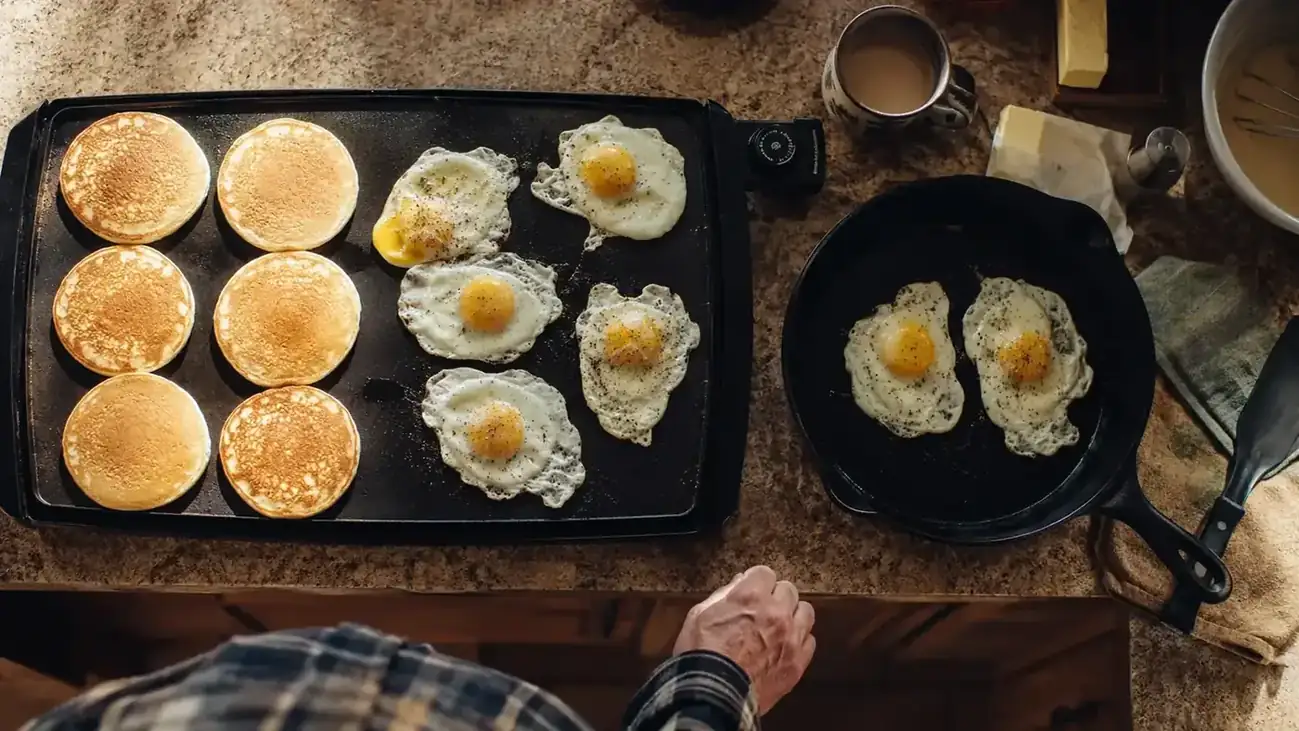
I've cooked breakfast on the same 10-inch cast iron skillet for over twenty years. It was my mother's before it was mine, and I always figured nothing could replace it. Then my daughter left her three kids with me for a Saturday morning and I needed to feed six eggs, eight pancakes, and a pile of bacon before anyone started crying about being hungry. That's the morning I finally plugged in the Presto 22-Inch Electric Griddle my neighbor Dale had been telling me about for a year, and it changed my answer to a question I get asked a lot: electric griddle or cast iron skillet, which one actually wins.
Short answer, if you're cooking for more than two people at a time, or you want one dial that holds a temperature instead of guessing at stove settings, the Presto griddle wins on speed and capacity. If you care most about a deep sear, oven use, and a pan that will outlive you, cast iron still has a real case. Below is the honest breakdown, not the version where one of these gets crowned perfect.
I want to be upfront about something before the comparison starts. I'm not getting rid of my skillet, and I'm not telling you to either. What changed for me is which pan I reach for first on an average morning. For twenty years the answer was automatic, cast iron, no question. These days it's automatic in the other direction, and the reasons why are pretty specific once you break them down side by side.
| Spec | Presto 22-Inch Electric Griddle | Cast Iron Skillet (10-inch) |
|---|---|---|
| Cooking surface | 150 square inches, fits 6 eggs or 4 pancakes at once | About 65 square inches, room for 2 eggs or 1 pancake |
| Heat control | Dial thermostat holds an exact temperature, no guessing | Stove burner only, temperature drifts as you cook |
| Preheat time | About 5 minutes to 375°F | 8 to 10 minutes to build even heat, longer if under-seasoned |
| Cook time for breakfast (4 people) | Around 9 minutes total, everything on one surface | 20 to 25 minutes, cooked in batches |
| Cleanup | Nonstick ceramic surface, wipes clean, dishwasher-safe removable parts | No soap, hand dry immediately, re-oil to protect seasoning |
| Weight and storage | About 8 lbs, handles fold flat, stores on its side in a cabinet | Around 5 to 8 lbs, but oddly shaped and takes a dedicated hook or shelf |
| Batch cooking for a crowd | Whole breakfast at once, food stays hot and ready together | One or two items at a time, first batch goes cold waiting on the rest |
| Best for | Weekday breakfasts, feeding a family, pancakes and eggs and bacon together | Searing a steak, finishing a dish in the oven, cornbread |
Where the Presto Griddle Wins
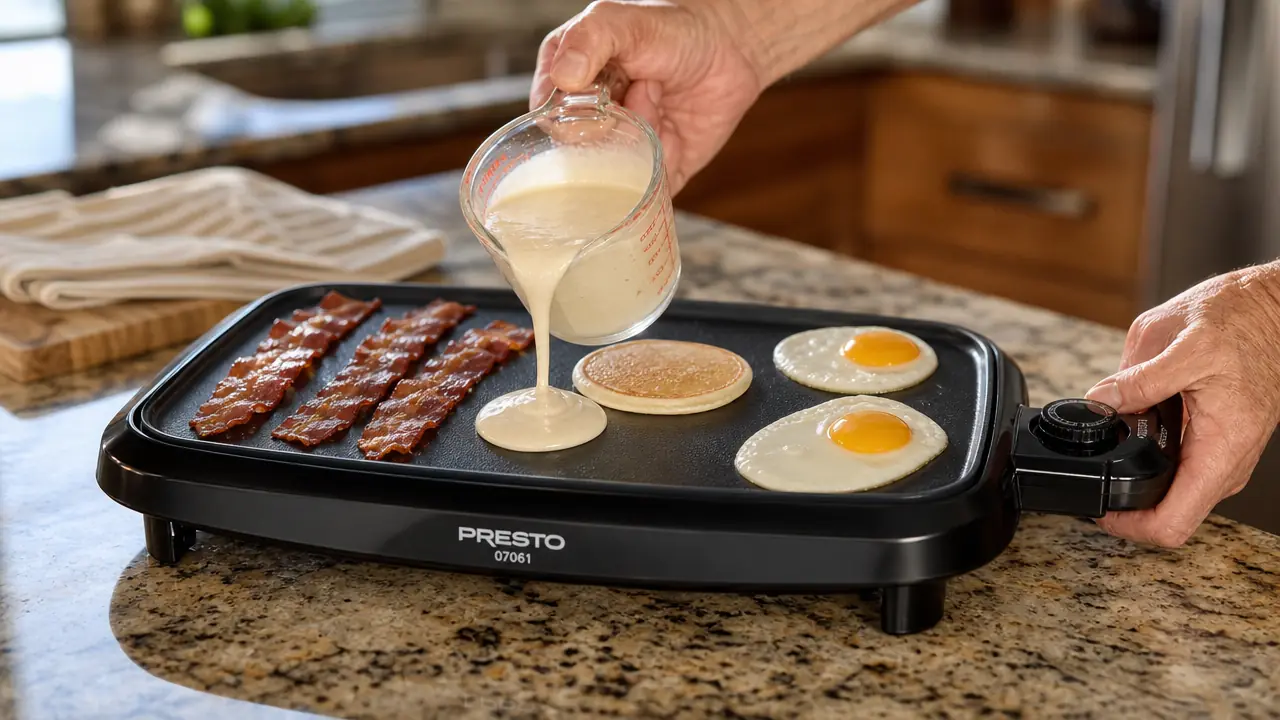
The biggest difference isn't heat, it's real estate. The Presto griddle gives you 150 square inches of nonstick ceramic surface, which is more than double what a 10-inch cast iron skillet offers. On a normal Saturday I can lay out six eggs, a row of bacon, and four pancakes at the same time, all finishing within a minute or two of each other. With the skillet, I was always cooking in relays, eggs first, keep them warm in the oven, then bacon, then pancakes, and by the time everyone sat down half the food had gone lukewarm.
The dial thermostat matters more than people expect going in. Cast iron holds heat beautifully once it gets there, but getting there on a stovetop means watching the pan, adjusting the burner, and hoping the heat stays even edge to edge. The Presto griddle's dial locks in at whatever temperature you set, usually 350°F for pancakes and 375°F for bacon and eggs, and it stays there without me touching anything. My wife Nadine, who burned her share of pancakes on our old gas stove, says it's the first surface that's ever cooked evenly from corner to corner without a hot spot in the middle.
Cleanup is where the Presto pulls furthest ahead. The nonstick ceramic surface wipes down with a damp cloth in under a minute, and the removable heating element and legs mean the cooking surface itself goes right in warm soapy water, no scrubbing, no re-seasoning ritual after. With cast iron, you can't just rinse it and walk away. You dry it immediately, add a thin coat of oil while it's still warm, and if you let food sit or use soap too aggressively, you're stripping seasoning you'll have to build back up over weeks of cooking.
Where Cast Iron Wins
I'm not going to pretend cast iron doesn't earn its keep, because it does, just in a different job than breakfast for a crowd. If I want a real sear on a steak or a pork chop, cast iron gets hotter and holds that heat with more mass than any nonstick surface. That crust you get searing meat in a cast iron skillet on high heat is something the Presto griddle, capped around 400°F for safety, simply isn't built to deliver. My neighbor Dale, who's been cooking on his Lodge skillet since before I met him, swears by it for exactly this, and he's not wrong.
Cast iron also goes places the griddle can't follow. You can slide it straight into a 450°F oven to finish a frittata or bake cornbread with a crust you can't get any other way, and you can set it over a campfire if the power goes out or you're cooking outdoors. A well-seasoned skillet, cared for right, will genuinely outlive you and get handed down, the way mine was handed down to me. There's a durability argument for cast iron that an electric appliance with a cord and a thermostat just can't match, no matter how good the nonstick coating is.
Feeding more than two people before 8am shouldn't take three pans and twenty minutes.
The Presto 22-Inch Electric Griddle cooks a full breakfast for a family on one surface, at one temperature, with cleanup that takes under a minute. Check today's price and current availability on Amazon.
Amazon Check Today's Price on Amazon →Cook Time: The Real Test
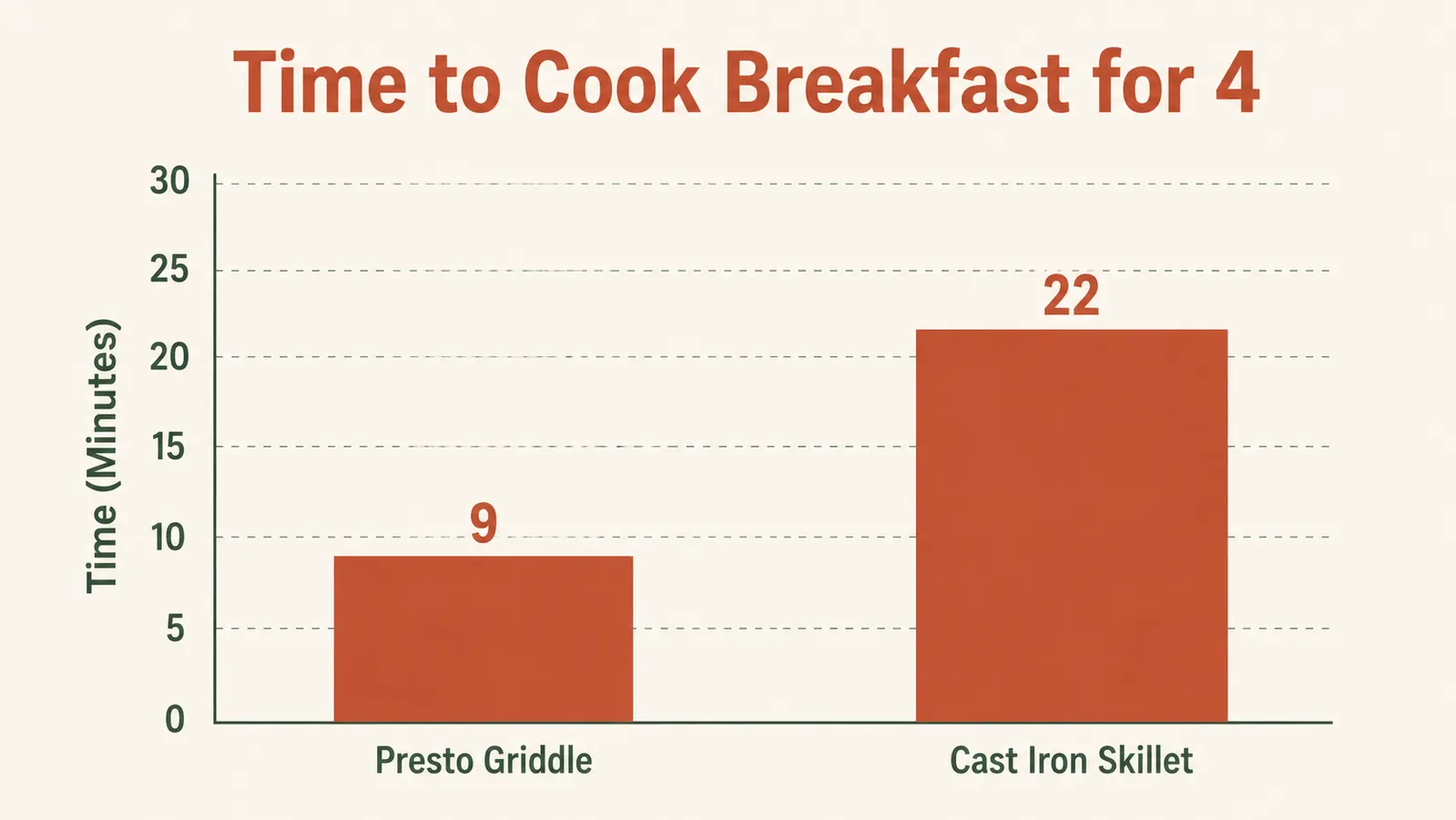
I timed both, back to back, on a Saturday when all three grandkids were over. On the cast iron skillet, cooking bacon first, then wiping most of the grease and cooking eggs, then pancakes in a third round, the whole breakfast for four people took just over 22 minutes, and that's with me moving fast and not burning anything. On the Presto griddle, bacon went on one side while eggs and pancakes went on the other, and everything came off the surface within 9 minutes of turning the dial on. That's not a small gap. That's the difference between everyone sitting down together while the food is hot, and the first two people finishing before the last plate even hits the table.
Part of that gap is surface area and part of it is the thermostat doing the work a stove burner makes you do by hand. With cast iron on a gas range, I'm adjusting the flame every few minutes to keep the pan from scorching the bottom layer of batter while the top stays raw. The griddle's dial just holds 375°F the entire time, so I'm not babysitting the heat, I'm just flipping food when it's ready. For a weekday breakfast before work or school, that's real time back.
Cleanup: What Actually Happens After Breakfast
This is the part nobody mentions when they're romanticizing cast iron. After a big breakfast, my skillet needs to be wiped out while it's still warm, scraped of any stuck bits with a plastic scraper, never soap unless I'm willing to strip and rebuild the seasoning, dried completely so it doesn't flash rust, and coated with a thin layer of oil before it goes back in the cabinet. Skip a step, especially the drying, and you'll find orange rust spots waiting for you next weekend. It's not hard once it's a habit, but it is a ritual, and some mornings with three grandkids underfoot, I don't have five extra minutes for a ritual.
The Presto griddle's ceramic nonstick surface just wipes clean with a damp cloth or a paper towel while it's still warm from cooking, no oiling required afterward. The heating element and folding legs detach from the cooking surface, so the flat top itself can go straight into the sink or the dishwasher if there's stuck-on syrup. There's no seasoning to maintain and no rust risk if you forget to dry it right away. For anyone who's ever put off cooking breakfast because they didn't want to deal with the pan afterward, that's the whole ballgame.
Durability and Maintenance Over the Years
Long term, cast iron is nearly impossible to kill. Mine has survived two moves, a house fire scare in the garage, and more than one grandkid using it as a step stool, and it still cooks fine after a quick re-season. If you drop it, it might chip tile before it chips itself. There's no motor, no thermostat, no cord to fail, just iron that gets better the more you use it. That's a real advantage if you're the type who wants to buy one pan and never think about it again for the rest of your life.
The Presto griddle is a different kind of durable. Mine has been in daily rotation for over a year now and the ceramic surface still releases eggs without a fight, but it's an electric appliance with a heating element inside, and that means it has a lifespan the way a toaster or a slow cooker does, not the way a chunk of iron does. Presto backs it with a standard limited warranty, and at 31,747 reviews and a 4.7-star average, most owners aren't reporting early failures. Still, if you want the one pan you buy once and never replace, that's cast iron's game to win, not the griddle's.

What About Meals Beyond Breakfast
Breakfast is where the griddle earns its keep in my house, but it's not a one-trick appliance. I've done grilled cheese for all three grandkids at once, smash burgers on a Friday night, quesadillas cut into wedges, and even reheated a full tray of leftovers without a microwave's rubbery texture. The flat, wide surface handles anything you'd normally spread across two stovetop burners, which frees up the rest of the stove for a side dish or a pot of soup.
Cast iron still wins for anything that needs real depth or goes in the oven, think chili, a Dutch-baby pancake, or a skillet cornbread with crisp edges. But for the flat, wide, everything-at-once style of cooking, the griddle covers more of my week than the skillet does, and that surprised me more than the breakfast numbers did.
My skillet will outlive me. My griddle gets breakfast on the table nine minutes after I turn the dial. Some mornings, that's the win that actually matters.
Who Should Buy Which
If you're cooking for one or two people, if you already own and love a cast iron skillet, or if searing meat and oven-finished dishes are a regular part of your cooking, keep the skillet in the rotation. It does things the griddle genuinely can't, and a good one lasts decades with basic care. But if breakfast in your house means more than two plates, if you're feeding grandkids on weekends, hosting a Sunday crowd, or you're just tired of cooking bacon in one pan and eggs in another while pancakes get cold on a paper towel, the Presto griddle solves a problem cast iron was never built to solve. In my kitchen now, the skillet handles Tuesday night steak. The griddle handles every single breakfast where more than two people are sitting at the table, and that's most mornings.
If you're still on the fence, think about your actual Saturday morning, not the cooking show version of it. If it involves more than two hungry people, a limited amount of counter space, and a limited amount of patience before someone asks when the food is coming, the griddle is the tool built for that exact morning. The skillet is a wonderful pan. It just isn't built to feed a crowd fast, and that's the job most of us actually have most mornings.
See why over 31,000 home cooks rate this griddle 4.7 stars for exactly this reason.
One surface, one dial, breakfast for the whole table in under 10 minutes. Check today's price and current availability on Amazon before your next Saturday crowd shows up hungry.
Amazon Check Today's Price on Amazon →