
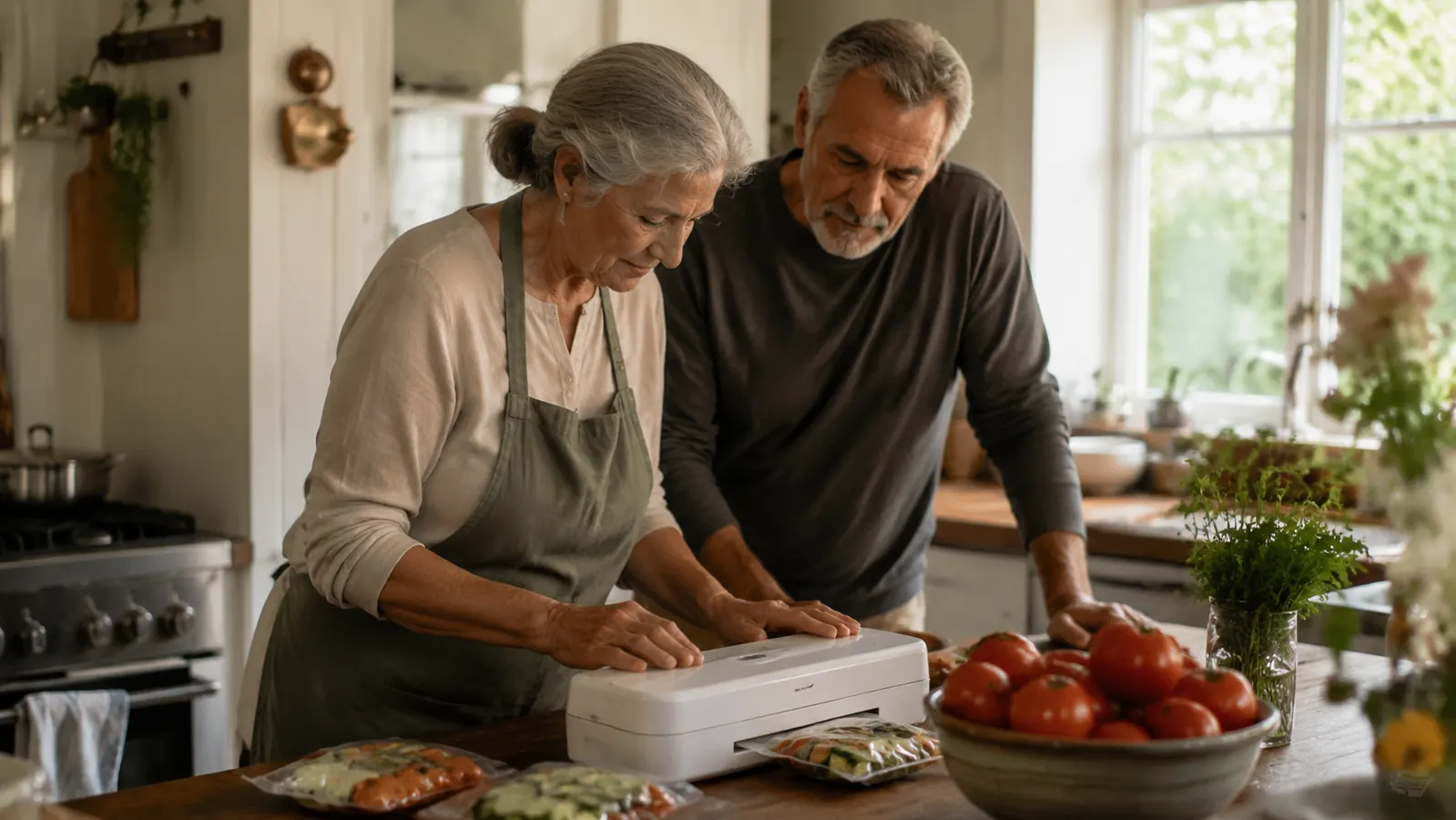
Six months ago I was flat-out done throwing away freezer-burned chicken. I'd buy the family pack at the grocery store because it was cheaper per pound, split it into meal-sized portions, toss them in regular freezer bags, and by week three half of it had that gray, freezer-burned crust no amount of marinade could save. My husband Ray started calling our chest freezer "the graveyard," which, fair. That's what finally pushed me to order the FoodSaver Compact Vacuum Sealer, the white one with the built-in bag storage, for right around what we'd been losing in wasted meat every month or two.
I've used it two to four times a week since late January, on everything from grocery-store chicken thighs to garden tomatoes to leftover chili Ray insists on freezing in single servings. This isn't a first-impressions review. This is what six months of near-daily use with a retired couple's kitchen habits actually looks like, which seals held and which didn't, whether the bags are worth the cost, and if I'd buy it again knowing what I know now.
The Quick Verdict
A reliable, no-fuss vacuum sealer that's genuinely cut our freezer waste by more than half, though liquid-heavy foods and the ongoing bag cost keep it from a perfect score.
Amazon Check Today's Price →Tired of Opening the Freezer to Meat You Can't Bring Yourself to Cook Anymore?
The FoodSaver Compact locks air out before freezer burn ever gets a foothold. See today's price and current availability on Amazon.
Amazon Check Today's Price on Amazon →How I've Used It
The first thing I sealed wasn't meat at all. It was six pounds of green beans from our garden that I'd already blanched and had absolutely no plan for. I laid the machine flat on the counter, ran the beans into portioned bags, and had them sealed and stacked in the chest freezer in maybe fifteen minutes. That first batch is still back there, and when I pulled a bag out in May it looked and tasted like it had been picked the week before, not last August, no ice crystals, no dull color, no freezer smell when I cracked the bag open.
From there it became a Sunday ritual. I buy chicken thighs and ground beef in the family packs, portion them into meal-sized amounts while they're still cold, and seal them before they ever hit the freezer. Ray does the same with the venison his brother gives us every fall, though I'll admit that's the one food where I've had the most seal failures, more on that below. On an average week I run the machine three or four times, sometimes for meat, sometimes for leftover soup, sometimes just to reseal a bag of shredded cheese so it doesn't turn into a brick. By my rough count I've sealed somewhere north of ninety bags since January, which is a lot of trial and error to draw conclusions from.
I also use it for things I never expected to, like keeping crackers fresh in the pantry and sealing up the extra fabric scraps from my quilting so they don't smell musty in the closet. Our daughter borrowed it for a week in March to seal up a batch of jerky for her son's Boy Scout camping trip, and it came back with a note taped to it asking where she could buy her own. It's not just a freezer tool once you get used to having it on the counter. That said, freezer duty is where it earns its keep, and that's where I judged it the hardest.
What's in the Box, and What You'll Need to Add
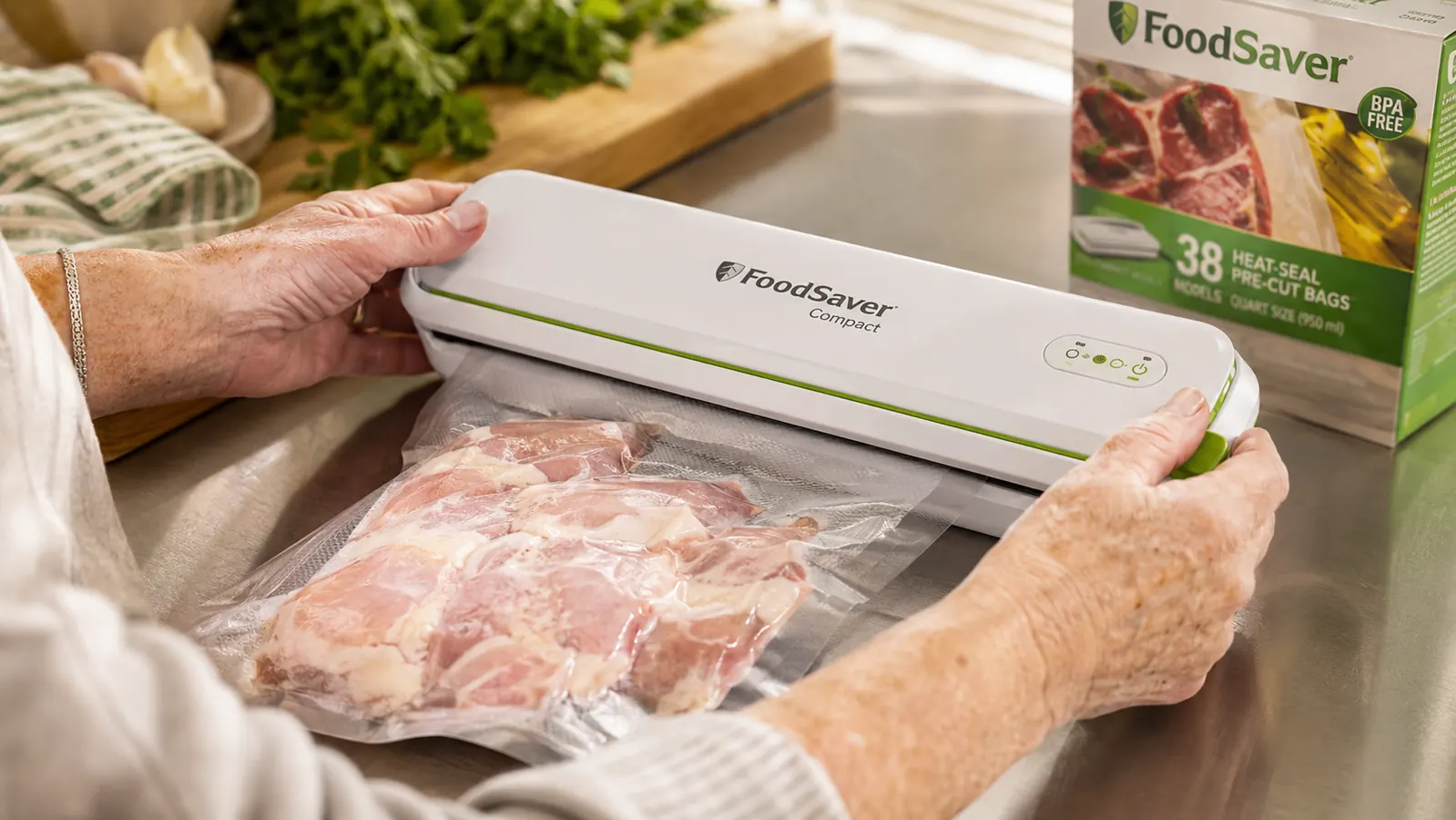
The Compact comes with the sealer itself, a starter roll of bag material, and a handful of pre-cut bags, enough to get you through your first week or two of testing but not much beyond that. If you're buying this expecting a full season of sealing without another purchase, adjust that expectation now. You'll need to buy more rolls or pre-cut bags fairly quickly, and that ongoing cost is the honest asterisk on this whole review, one I wish someone had spelled out for me before I ordered.
The unit itself is smaller than I expected, which I actually like. It stores upright in a cabinet between uses and doesn't hog counter space the way our old bread maker did before we gave it away. The built-in roll storage and cutter are the feature I use most, since I almost never buy pre-cut bags anymore. I just pull off however much length I need for whatever I'm sealing, whether that's a small bag of leftover rice or a long one for a whole rack of ribs, and there's a built-in cutting guide so the edges come out straight instead of jagged.
One thing worth knowing before you buy: this is a heat-seal system, not the zip-top style some other machines use. Once a bag is sealed shut, you cut it open to use the contents, and if you want to reseal the same bag you're cutting a new strip and sealing again. That's not a flaw exactly, it's just how the FoodSaver bag system works, and it's worth planning your bag sizes around it rather than assuming you'll reuse the same bag five times the way you might with a zip-top freezer bag.
Six Months of Nearly Daily Use: What Held Up
The motor has never once overheated or shut down mid-cycle on me, even during a marathon session before Thanksgiving prep last fall when I sealed nine bags back to back, turkey portions, gravy, and three kinds of pie filling my sister insisted on freezing ahead. The seal itself, on dry or mostly-dry foods, has been consistent from day one through now. I still get that same tight, wrinkled shrink-wrap look on a bag of chicken in month six that I got on the very first bag of green beans.
The drip tray and removable parts have wiped clean every time, no cracking or discoloration, which matters because I run this thing through a lot of raw meat juice. I do wash the removable tray by hand rather than the dishwasher, mostly out of habit, and it still looks close to new. The exterior has a couple of small scuffs from being slid in and out of the cabinet, nothing that affects function, and the latch that locks the lid down still clicks shut as firmly as it did in January.
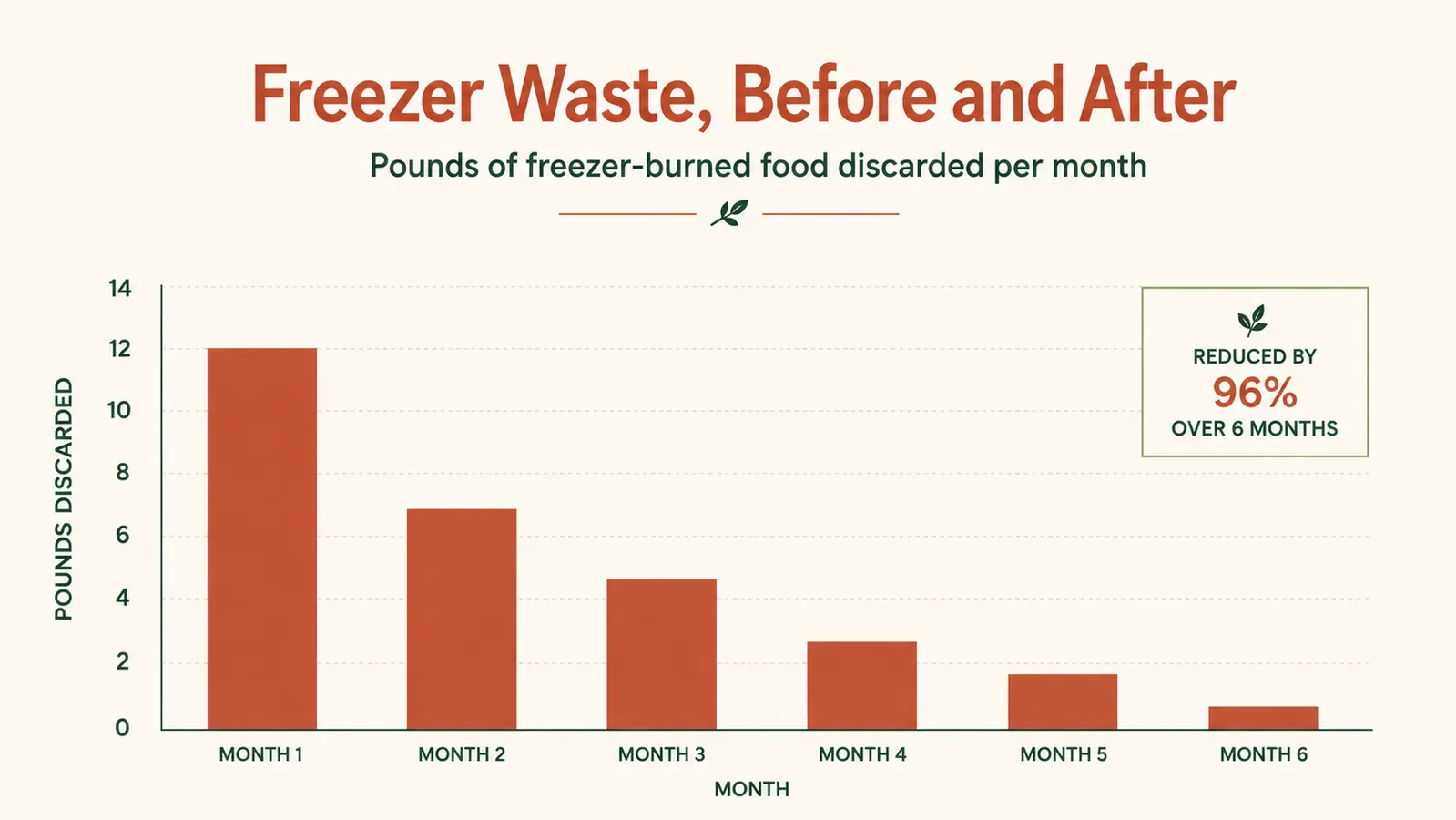
The number that convinced me this was worth it wasn't a feeling, it was the freezer itself. Before the sealer, I was throwing out roughly two to three pounds of freezer-burned meat and produce a month, easily. In the last three months that number has been close to zero. Everything I pull out still looks like food, not like something that's been through a war. Ray's stopped calling it the graveyard, which might be the real review right there.
Where It Struggled: Liquids, Soft Cheese, and the Learning Curve
Anything with real liquid content is where this machine and I have had our disagreements. Soup, marinated meat, or Ray's venison that's been soaking in brine, the vacuum will sometimes pull liquid right up into the seal channel, and you end up with a weak or incomplete seal that lets air back in within a day or two. FoodSaver's own instructions tell you to freeze liquids solid first or use the moist food setting, and once I started doing that consistently my failure rate dropped a lot. But it took me a few ruined bags of chili to figure that out, and it's not something the box makes obvious.
Soft cheese was another early miss. The first time I tried to seal a block of fresh mozzarella, the vacuum pressure flattened it into something closer to a cheese pancake. Firm cheeses, cheddar and the like, seal just fine. Soft ones need to go in the freezer for twenty minutes first, or you skip vacuum sealing them altogether and just use the bag as a zip-style pouch without running the suction.
There's also a real learning curve on bag length. I wasted more bag material than I'd like to admit in my first two weeks, cutting pieces too short and having to redo them, or cutting them long out of caution and wasting material. That cost adds up, especially on a fixed income, so budget for some trial and error, and don't judge the machine on your very first few attempts. By week three I could eyeball a length within an inch or two, and the waste basically stopped.
Sous Vide and the Other Uses I Didn't Expect
The box mentions sous vide cooking, and I was skeptical until Ray's brother lent us an immersion circulator to try. Sealing a steak or a piece of salmon flat, with no air pockets, made a real difference in how evenly it cooked in the water bath, no soggy edges, no bag floating up out of the water. We ended up buying our own circulator in April largely because the sealer made that method finally worth the trouble.
I've also started using it to portion out coffee beans so they don't go stale between trips to the store, and to protect important papers, our passports and a couple of old photographs, before we stored them in a fireproof box. None of that was why I bought it, but six months in, those small extra uses are part of why it's stayed on the counter instead of getting shoved into a cabinet and forgotten like so many gadgets before it.
The Alternatives I Tried First
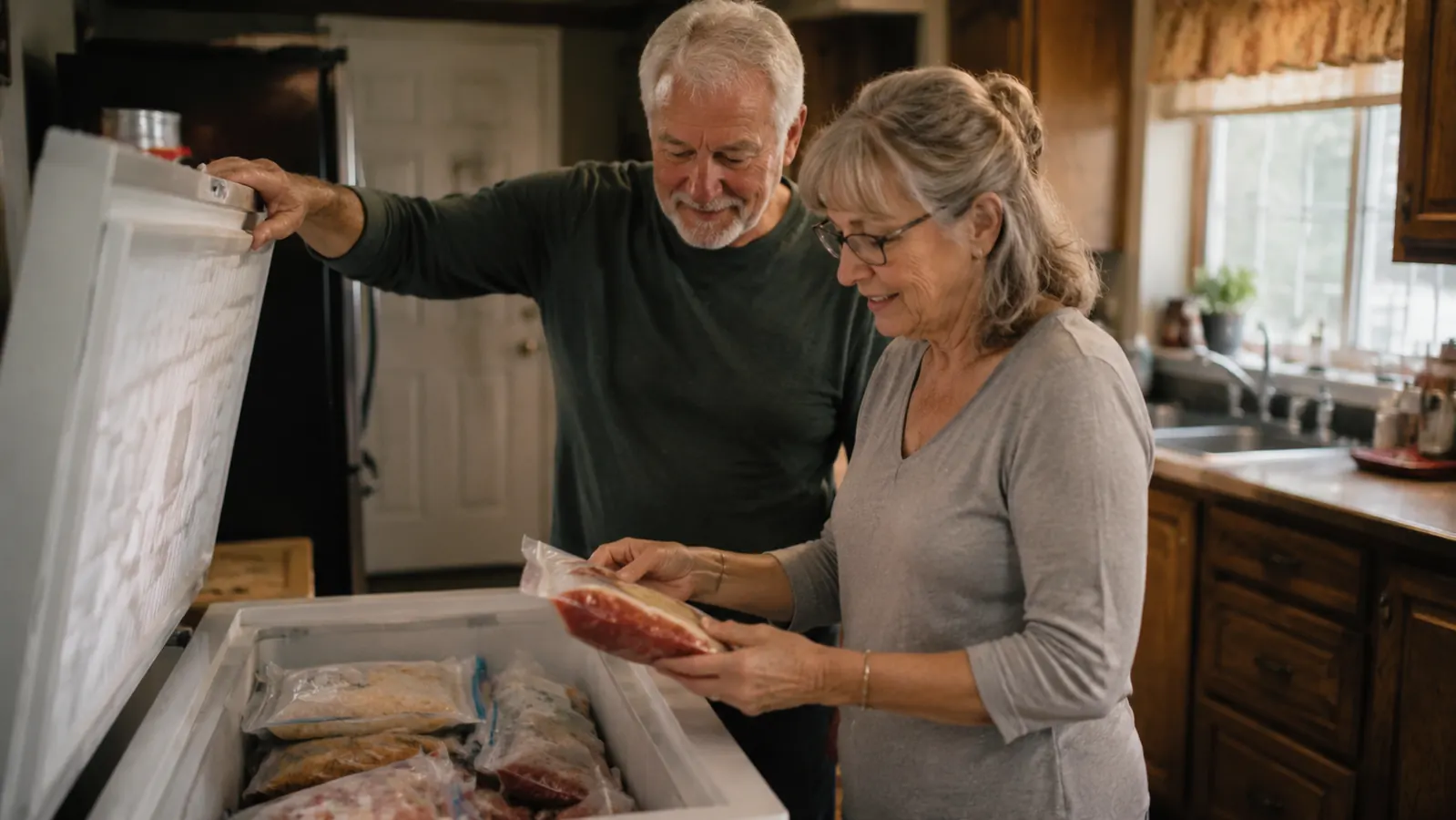
Before I bought this, I tried the cheap-and-cheerful route for almost a year, those reusable silicone bags with the one-way valve you press by hand. They're fine for short-term fridge storage, but I never got a seal tight enough to trust in the freezer for more than a few weeks. Twice I opened a "sealed" bag of berries to find ice crystals had already crept in.
I also looked at a couple of the larger, pricier vacuum sealers with the external hose attachment for canisters and jars. If you do a lot of canning or Mason jar storage, that's a real feature worth having. We don't, so the Compact's simpler bag-only design was the better fit for how our kitchen actually works. I'd rather have a smaller machine I use every week than a bigger one with features that sit unused in a drawer.
What I Liked
- Cut our monthly freezer waste from a few pounds to almost nothing
- Motor has run reliably through six months of near-daily use with no overheating
- Built-in roll storage and cutter make custom bag sizes fast
- Compact enough to store upright in a cabinet, not a permanent counter hog
- Seals dry and mostly-dry foods tight and consistently every time
- Doubles well for sous vide, pantry staples, and even paper storage
Where It Falls Short
- Struggles with liquid-heavy foods unless you pre-freeze or use the moist setting
- Ongoing bag cost adds up faster than the box suggests
- Learning curve on bag length wastes material in the first couple of weeks
- Not a zip-reseal system, you cut and reseal a new strip each time
- Soft cheese and anything delicate needs pre-freezing before sealing
The number that convinced me wasn't a feeling, it was the freezer itself. I went from tossing two or three pounds of freezer-burned food a month to almost none.
Who This Is For
If you buy meat or produce in bulk to save money, whether that's a family pack from the grocery store, a garden that overproduces every August, or a deer someone in the family always seems to be sharing, this pays for itself in saved food faster than you'd think. It's also a natural fit if you cook big batches on weekends and freeze individual portions, since a tight seal is what keeps those portions tasting like they were made that day instead of three weeks ago.
Who Should Skip It
If you live alone, cook small quantities, and rarely freeze anything, the ongoing bag cost probably isn't worth it for you, a good set of freezer-safe containers will do the job fine. And if canning or jar storage is your main interest, look at a model built specifically with a canister hose attachment rather than this bag-focused compact one.
Ready to Stop Losing Grocery Money to Your Own Freezer?
Six months in, this is still the one gadget on our counter that's paid for itself the fastest. See today's price on Amazon before you plan your next bulk grocery trip.
Amazon Check Today's Price on Amazon →