
For fifteen years my freezer bag drawer held nothing but Ziploc, the quart size for chicken breasts and the gallon size for anything bigger. It felt like the sensible choice. A box costs a few dollars, you fold the top over, press the air out with your hands, and zip it shut. Then two summers ago my garden finally produced more green beans and tomatoes than my family could eat fresh, and I started freezing in bulk for the first time. That's when I found out how much of what I was freezing in Ziploc bags was quietly turning gray and freezer-burned before we ever got around to eating it, and how much of that waste I'd simply gotten used to accepting as normal.
Short answer, if you freeze more than a few bags a month, whether that's garden harvest, a side of beef split into portions, or just weekly meal prep, the FoodSaver Compact Vacuum Sealer pays for itself in saved food faster than most people expect. Ziploc bags still have a real place in a kitchen, just not the place I used to give them. Here's the honest breakdown, cost per use and all, from someone who ran both side by side for a full freezer season before writing a word of this.
| Spec | FoodSaver Compact Vacuum Sealer | Ziploc Freezer Bags |
|---|---|---|
| Seal type | Vacuum-sealed, airtight edge-to-edge seal | Press-and-zip seal, air pockets remain along the fold |
| Air removed before sealing | Pulls out roughly 99% of the air in the bag automatically | Whatever you can press out with your palm, usually not all of it |
| Freezer burn protection | Food stays freezer-burn free for close to a year in most cases | Freezer burn risk shows up within 4 to 8 weeks on fattier cuts |
| Cost per sealed portion | Roll bags offer the most economical per-portion cost when cut to size | Economical per bag, more for the heavier freezer weight |
| Reusability | Bags can be rinsed and reused several times for dry goods | Not meant to be reused once it's held raw meat or thawed food |
| Marinating and sous vide | Vacuum seal pulls marinade into meat in minutes, safe for sous vide | Water displacement trick works in a pinch, but the zip seal can loosen in a hot water bath |
| Odd-shaped or bulk items | Roll lets you custom-cut a bag for a whole chicken, a slab of ribs, or a bundle of green beans | Fixed bag sizes, often means double-bagging odd shapes for safety |
| Everyday setup | One-time machine purchase, then a few seconds per bag after that | No machine needed, but more hands-on pressing and often double-bagging |
Where the FoodSaver Wins
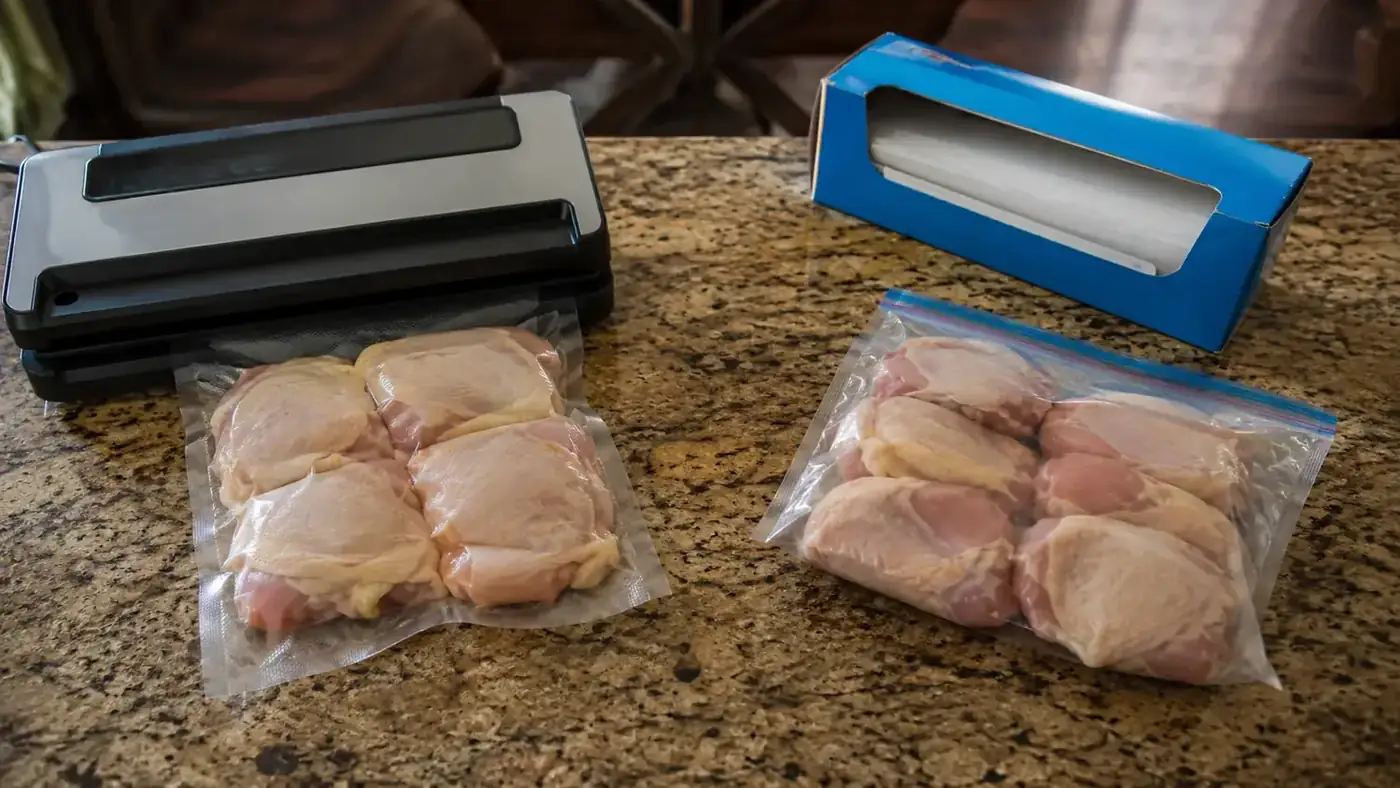
The whole difference comes down to air, and how much of it you actually get out. A Ziploc bag, pressed by hand, still traps enough air along the seams and around whatever you packed that ice crystals start forming within a few weeks in a normal freezer. Ice crystals are what freezer burn actually is, moisture pulled out of the food and turned to frost on the surface, and once that starts, texture is gone even if the food is technically still safe to eat. The FoodSaver pulls out close to all of that air before the seal even closes, so there's nothing left for ice crystals to form on. Chicken thighs I sealed in March were still pink and normal-textured when I cooked them the following January, something I never once managed with a hand-pressed bag.
The other win is how much less you throw away. I used to open the freezer, find a Ziploc bag of ground beef with gray freezer-burned patches on one side, and either cut that part off and waste it or just toss the whole bag rather than risk the taste. That happened often enough that I never really counted it as a cost, it just felt like normal freezer maintenance. Once I started weighing what I threw out after switching to the vacuum sealer, the number dropped close to nothing. When you stop losing a package here and a package there to freezer burn, the machine's upfront cost stops feeling like an extra kitchen gadget and starts feeling like the thing that was actually saving money the whole time.
Where Ziploc Bags Win
I'm not going to pretend Ziploc doesn't still have a job in my kitchen, because it does. For anything going in the fridge for a day or two, a quick school lunch, or leftovers I know we'll finish by the weekend, pulling out the FoodSaver and running a bag through the sealing cycle is more machine than the moment calls for. Ziploc wins on speed for short-term storage every time. Grab a bag, fill it, zip it, done in ten seconds, no cords, no counter space needed, nothing to plug in.
It also wins on flexibility when you're away from the kitchen. I keep a box of quart-size Ziploc bags in the car for farmers market trips and in my purse for snacks on long drives with the grandkids. A vacuum sealer isn't coming with me anywhere, and it shouldn't have to. For liquids you plan to use within a few days, for packing a sandwich, or for keeping cut vegetables from drying out in the crisper drawer overnight, a Ziploc bag is still the right, simple tool. The FoodSaver is built for storage that needs to last months, not the everyday grab-and-go stuff.
Every gray, freezer-burned package you toss is money you already spent, wasted.
The FoodSaver Compact Vacuum Sealer pulls the air out that causes freezer burn in the first place, so food you freeze in March still tastes right in January. Check today's price and current availability on Amazon.
Amazon Check Today's Price on Amazon →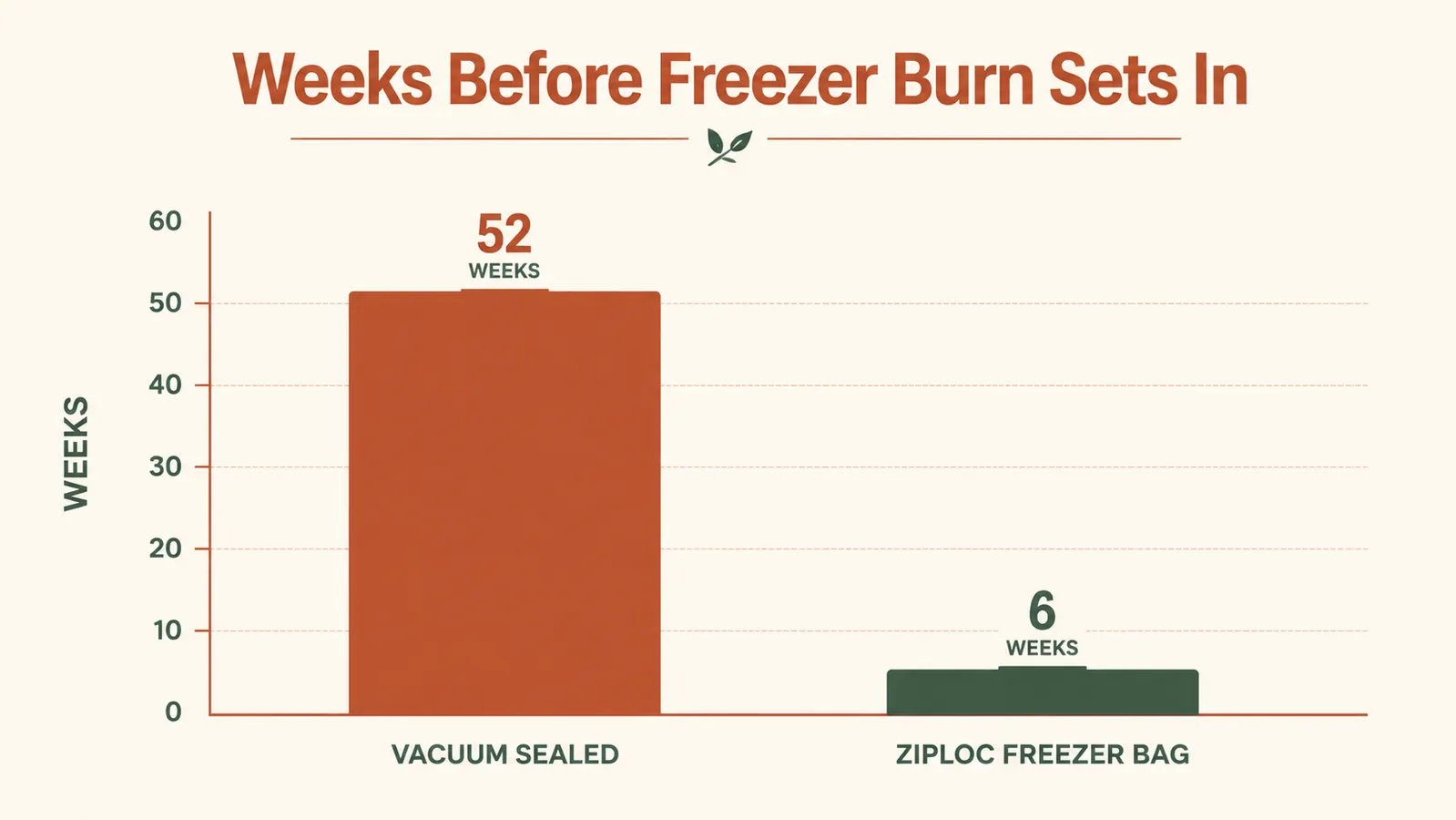
The Real Money Math
Here's the comparison nobody runs before they buy a box of freezer bags. A box of Ziploc gallon freezer bags typically works out to a moderate per-bag cost, which sounds cheap, and by itself it is. FoodSaver roll bags, once you're cutting your own custom sizes instead of buying pre-cut, run at a lower per-portion cost. So on the bag alone, vacuum sealing is already the better deal, before you even factor in what gets wasted.
Now add the food itself. A pound of ground beef, chicken thighs, or garden green beans isn't worth pennies, it's worth several dollars. Every time a Ziploc bag lets in enough air to freezer-burn that pound of food and it gets thrown out or trimmed down, you've lost the food's full value, not just the bag's cost. I started keeping a rough tally of what went in the trash from freezer burn before I switched, and it was close to one package a month between meats and garden vegetables. At even a conservative average, that's real money walking out the door every single month, on top of whatever the bags themselves cost. The vacuum sealer earns back its price the first few times it prevents that loss, and after that it's just savings, month after month, without me having to think about it.
What Actually Happens in the Freezer
I ran an informal side-by-side test with my own freezer that I'd recommend anyone try before deciding. I sealed two identical portions of chicken thighs from the same package, one in a FoodSaver bag and one in a Ziploc freezer bag pressed as flat and airtight as I could manage by hand. Both went into the same chest freezer on the same day. By week six, the Ziploc bag already showed the first light gray patches along one edge, the telltale sign of freezer burn starting. The vacuum-sealed bag looked exactly the same as the day I sealed it.
By month three, the difference wasn't subtle anymore. The Ziploc portion had noticeable ice crystals built up inside the bag and a section of the meat had gone tough and dry once cooked, even after trimming the visibly burned part. The vacuum-sealed portion cooked up exactly like fresh chicken. That test is the whole argument in miniature. It's not that Ziploc bags are poorly made, it's that a hand-pressed seal simply can't remove air the way a machine built specifically to remove air can, and in a freezer, air is the one thing working against you every single day the food sits there.

Cleanup, Storage, and Everyday Use
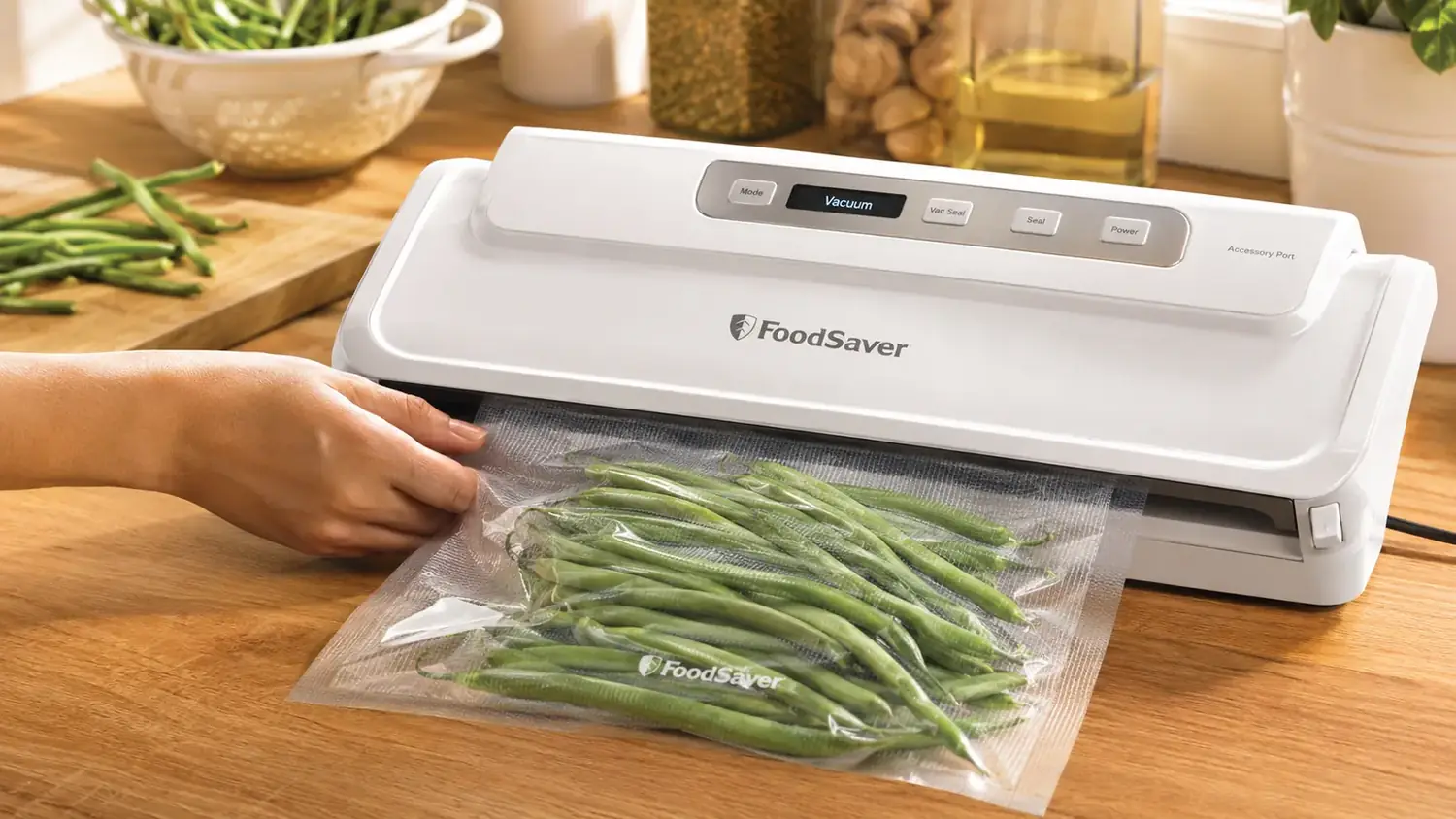
The FoodSaver itself is a small appliance, not much bigger than a toaster, and it stores flat in a cabinet between uses. Running a bag takes maybe fifteen seconds once you get the hang of loading it into the sealing strip and pressing the vacuum button, and the removable drip tray catches any liquid that gets pulled up during the cycle, so cleanup is just a quick rinse of that tray, not the whole machine. The roll of bag material sits in a slot on top, and you cut whatever length you need, which is the part that ended up mattering most for me once I started sealing odd-shaped things like a whole rack of ribs or a bundle of asparagus that never fit neatly into a pre-made bag size.
Ziploc bags need no machine and no cleanup at all, which is exactly why they'll never fully leave my kitchen. There's a real appeal to a tool with zero learning curve and zero moving parts. But that same simplicity is what limits it. You can't vacuum seal a bag by hand no matter how carefully you press, and you can't reuse most freezer bags once they've held raw meat, so every single portion means a brand new bag out of the box. Over a year of regular freezing, that adds up in a way the FoodSaver's reusable, cut-to-size roll simply doesn't.
The bag isn't the expensive part. The pound of chicken you throw out because the bag let air in for six months is the expensive part.
Who Should Buy Which
If your freezer holds a bag or two of leftovers and you mostly use the fridge, not the freezer, for day-to-day storage, Ziploc bags are still the right, simple answer. There's no reason to run a vacuum sealer for a sandwich or a cup of soup you'll eat by Thursday. But if you're freezing meat in bulk from a warehouse club run, putting up a garden harvest, doing meal prep for the week, or you've ever opened your freezer and found something gray and freezer-burned that you had to throw away, the FoodSaver solves a problem Ziploc bags were never built to solve. In my kitchen now, Ziploc handles the short-term stuff. The vacuum sealer handles anything that needs to still taste right in three months, and that's most of what actually goes into my chest freezer these days.
Stop paying for food twice, once at the store and again when it goes in the trash.
The FoodSaver Compact Vacuum Sealer keeps meat, produce, and leftovers freezer-burn free for months instead of weeks. Check today's price and current availability on Amazon before your next big freezer stock-up.
Amazon Check Today's Price on Amazon →