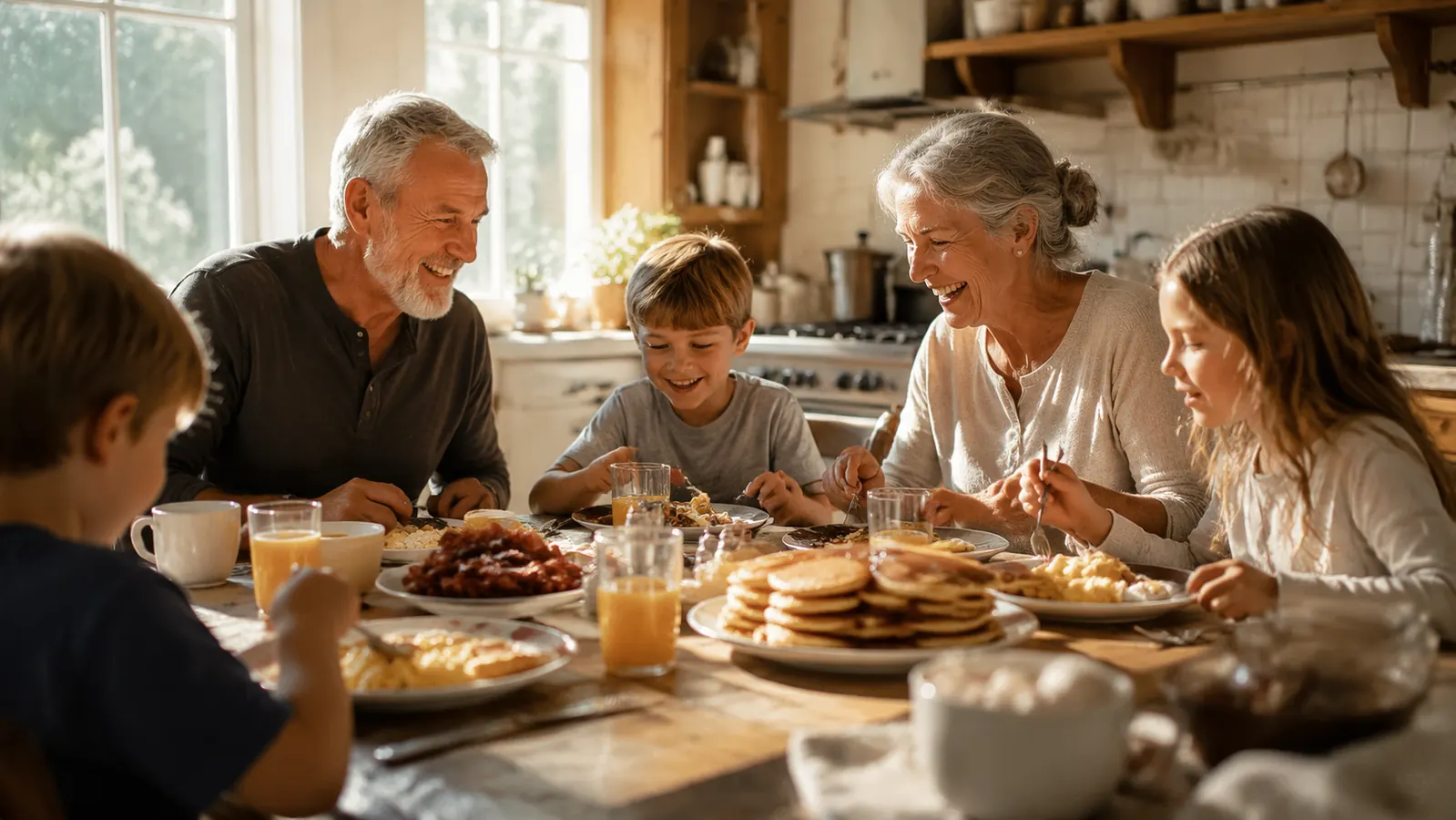
The morning everyone piles into my kitchen for breakfast used to be the morning I dreaded most. Six people, sometimes nine when my son brings the grandkids over, and me standing at the stove juggling one skillet of eggs, one skillet of bacon, and a griddle pan for pancakes that only fit four at a time. By the time the last plate went out, the first plate was cold and I hadn't sat down once.
What actually fixed it wasn't a bigger stove or getting up earlier. It was switching to one flat cooking surface big enough to do everything at once. I use a Presto 22-inch electric griddle now, and the whole approach to a crowd breakfast changed. Here's the system, step by step, that gets a full table fed hot and together instead of in shifts.
None of this requires special skill or an early alarm. It's really just a sequencing problem, the same one a short-order cook solves every Saturday morning at the diner, and once you see it laid out in five steps, you'll wonder why you spent so many years rotating pans.
One Surface, Twenty Servings, No Rotating Pans
This is the griddle that made big-family breakfasts stop feeling like a shift at a diner. Twenty-two inches of nonstick ceramic surface, removable handles so it stores flat, and an even heat that doesn't scorch the first batch while the last one's still raw.
Amazon Check Today's Price on Amazon →Step 1: Plan Your Lineup the Night Before
The biggest time loss in a crowd breakfast isn't the cooking, it's the standing around deciding what goes on next. The night before, I write out everything I'm making on a sticky note in the order it needs to hit the griddle: bacon first, then pancakes, then eggs last since they cook fastest and hold up worst sitting around.
I also pull out every ingredient and tool before anyone wakes up. Bacon out of the fridge so it isn't ice cold going onto the heat, pancake batter mixed and covered, eggs cracked into a bowl and whisked. None of this takes more than ten minutes, but it means that once the griddle is hot, I'm not opening the fridge four times while food burns behind me.
If you're feeding more than eight, count your servings against the griddle's real cooking surface, not the box dimensions. A 22-inch surface comfortably holds twelve strips of bacon, or six to eight pancakes, or a dozen eggs' worth of scramble spread thin. Knowing that number ahead of time tells you exactly how many rounds you'll need to run.
One more thing that saves real minutes: group foods by how long they hold up once cooked, not just by cook time. Bacon and pancakes both hold reasonably well for ten or fifteen minutes under foil, so they can go first without anyone noticing they sat a while. Eggs and anything with cheese melted in go dead last, timed to land on the table the moment everyone sits down.
Step 2: Preheat One Surface Instead of Three Pans
Here's where most crowd breakfasts fall apart before they start. Three pans on three burners means three different preheat times, three different hot spots, and usually one burner that runs hotter than the dial says. I used to scorch eggs on the back burner while the front one was still lukewarm.
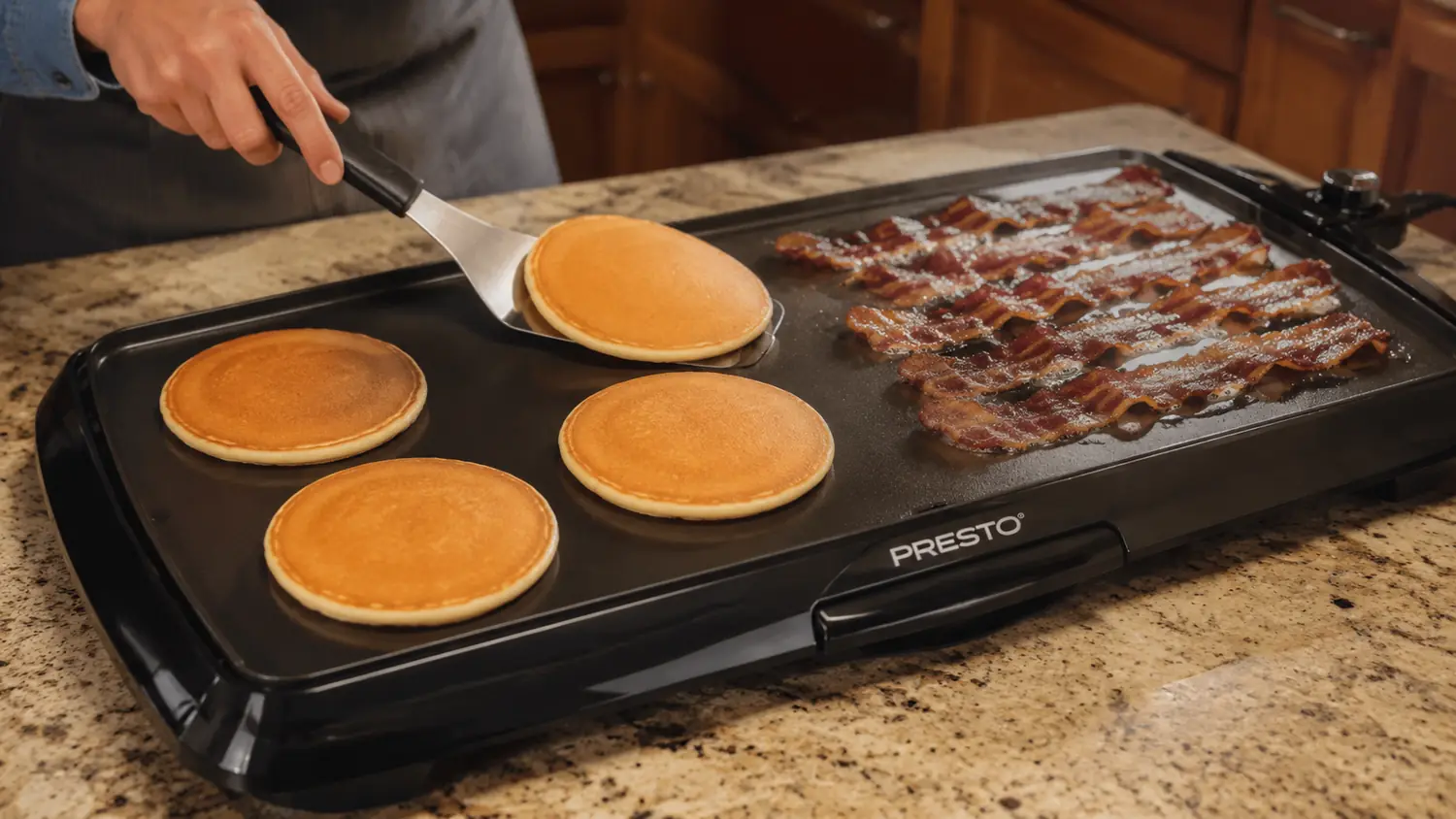
With a flat electric griddle, you set one dial and the whole 22-inch surface comes up to an even temperature at the same rate. I preheat mine to 375 degrees for bacon and pancakes, which takes about six minutes with the indicator light letting me know when it's actually ready instead of guessing.
That even heat matters more than people expect. A cheap griddle plate will run 40 degrees hotter in the center than at the edges, which means whatever you set down last cooks slower and unevenly. The ceramic surface on the Presto held a steady temperature across a dozen tests with my kitchen thermometer, corner to corner, which is the whole reason batch cooking for a crowd works at all.
A thin, lightweight griddle plate will also warp over a few years of high heat, and once it warps, you get a dip in the middle where grease pools and food cooks unevenly no matter how careful you are. Look for one with some real weight to the cooking surface. It's a small detail that only shows up two or three years in, but it's the difference between a griddle that still lays flat and one you're fighting with.
Step 3: Cook in Zones, Not in Rounds
Once the surface is hot, I stop thinking of it as one griddle and start thinking of it as three zones. Bacon goes down on the left third first since it takes longest, about eight minutes. Four minutes in, pancake batter goes down in the middle third. Two minutes after that, eggs go on the right third since they finish fastest.
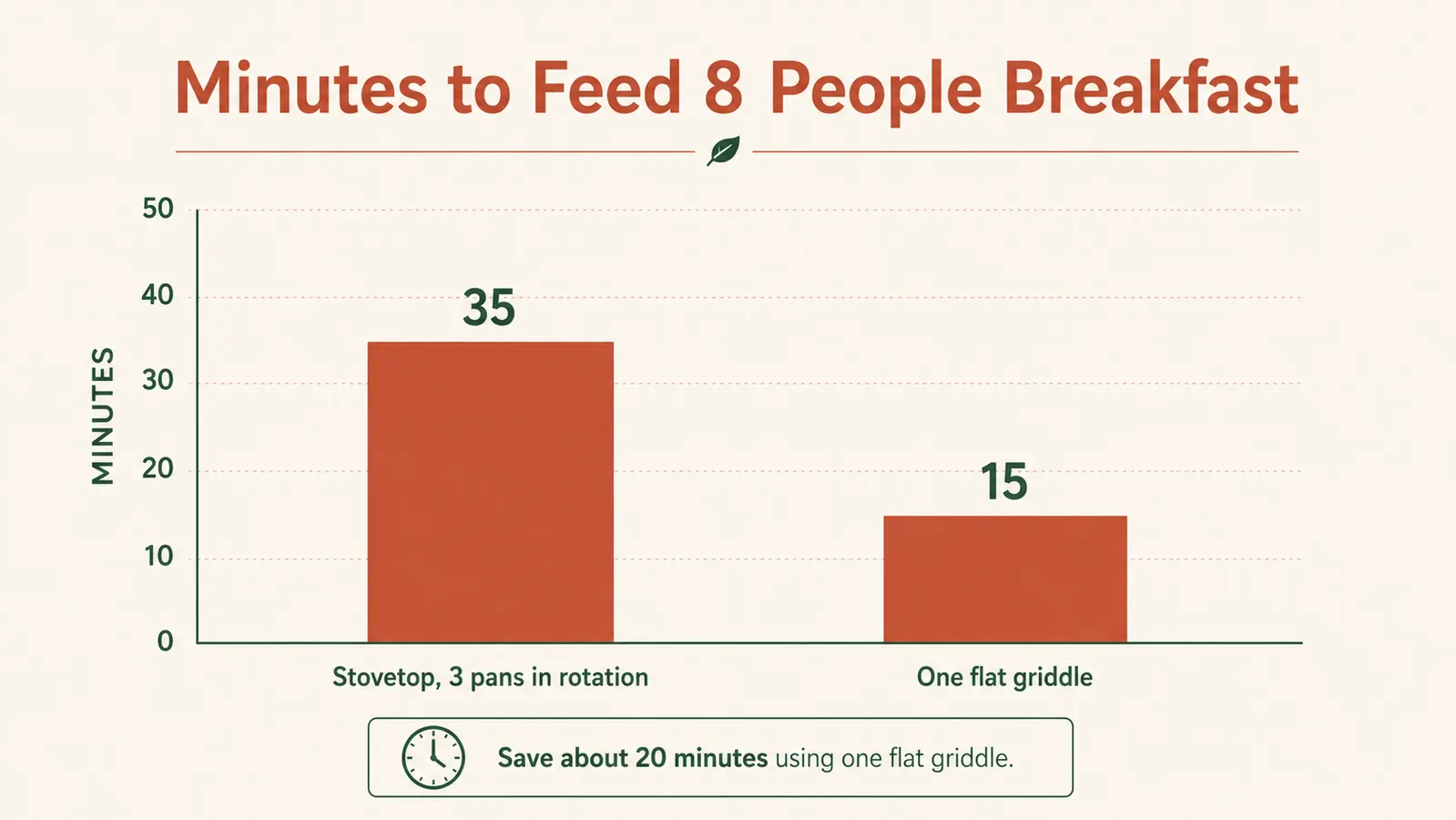
This staggered zone approach means everything comes off the griddle within about ninety seconds of each other, instead of three separate dishes finished twenty minutes apart. My daughter timed it on her phone the last time she visited with her two kids: eleven minutes from griddle-on to a fully plated breakfast for six people.
The trick is respecting cook times, not surface space. Bacon fat will want to creep toward your pancakes if you crowd the zones too close together, so I leave a couple inches of buffer and wipe grease toward the back edge with a spatula as I go. It's a small habit but it keeps your pancakes from tasting like bacon grease, which nobody at my table has ever complained about but I'd rather avoid anyway.
Resist the urge to flip pancakes early just because you're in a hurry. On an evenly heated surface, bubbles across the whole top of the pancake are your real signal, not a clock. Flip too soon on a big batch and you'll end up scraping half of them off the surface instead of serving them, which costs you more time than it saves.
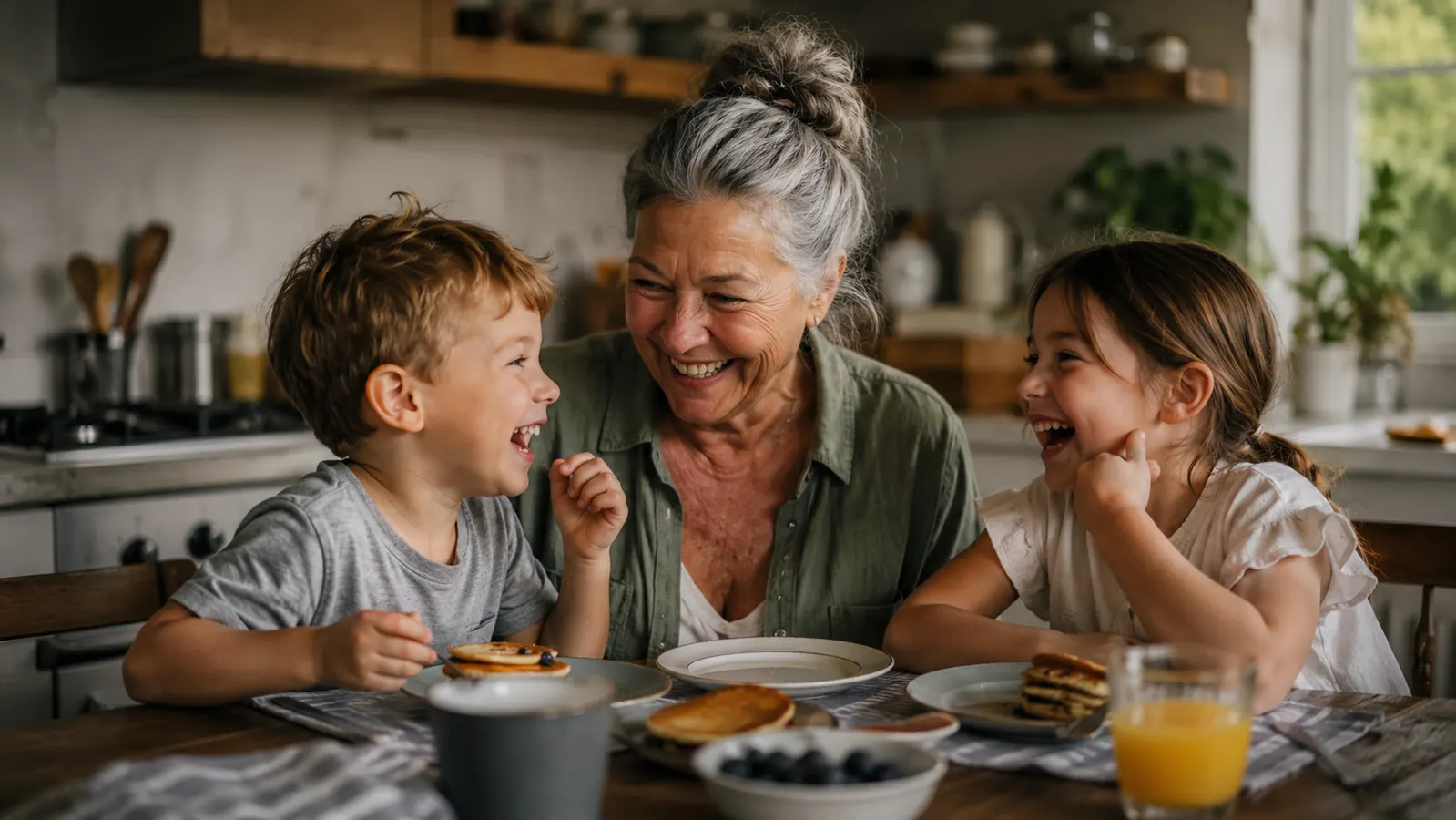
Step 4: Hold the First Batches Without Drying Them Out
If you're feeding more than the griddle can hold in one pass, you need a holding plan or your first batch goes cold while you finish the second. I keep my oven on its lowest setting, usually 170 to 200 degrees, with a baking sheet inside. Finished bacon and pancakes go straight there, loosely tented with foil, while I run the next round.
Eggs are the one thing I don't hold this way. They turn rubbery fast under any heat, so I always cook eggs last, right before serving, timed to land on plates within a couple minutes of coming off the griddle. Everything else can wait ten or fifteen minutes in a warm oven without losing much.
A second option, if your oven's already full of casserole for a holiday spread, is to drop the griddle's own thermostat down to its lowest warm setting once your last batch is cooking. The Presto holds a low simmer-warm range well below its cooking temperature, so finished food sitting at the cool edge of the surface stays hot without continuing to cook.
If you don't have a spare baking sheet, a wire cooling rack set over a plate works even better than foil for bacon specifically. It keeps the bacon up out of its own grease so it stays crisp instead of going soft while it waits, which matters if you've got a bacon purist at your table the way I do.
Step 5: Serve Family-Style Straight From the Surface
The last step is the one that actually saves you the most time, and it's simple: stop plating in the kitchen and let people build their own plates at the table, or at least at the counter next to the griddle. I set out plates, forks, and syrup, then just start pulling food off the griddle onto a big platter as it finishes.
This is where removable handles matter more than people expect before they own one. My griddle's handles pop off, so once everything's cooked I can carry the whole flat surface, still warm, over near the table if I want to keep a second round going while everyone eats the first. No hauling a hot cast iron skillet across the kitchen with two oven mitts.
Cleanup afterward is the other reason this approach holds up on repeat. One ceramic surface wipes down with a damp cloth in under two minutes, once it's cooled, instead of scrubbing three separate pans with baked-on egg and bacon fat. That's fifteen extra minutes of your Sunday back, every single week you host.
If you've got young grandkids underfoot the way I do, keep the cord and the countertop edge in mind when you set up. I plug the griddle in against the back wall, away from where little hands reach for syrup, and I don't let anyone near the surface itself until I've unplugged it and it's had a few minutes to cool. A hot 22-inch surface holds heat longer than you'd think.
What Else Helps
A couple of small additions make the whole system run smoother. A wide silicone spatula with a thin edge slides under pancakes and eggs without tearing them, which matters more on a big flat surface than it does in a deep skillet. A simple oven thermometer, the kind that clips to a rack, takes the guessing out of your low-hold setting so you're not accidentally cooking bacon at 300 degrees for twenty minutes. And if you're regularly feeding eight or more, a second baking sheet for holding means you're not stacking bacon on top of pancakes and steaming everything soft.
It also helps to double your pancake batter on purpose. Once the griddle is hot and you're already committed to the cleanup, cooking twelve extra pancakes costs you almost nothing beyond a few more minutes, and they freeze well between sheets of wax paper for busy weekday mornings when nobody has time to cook from scratch. None of these habits cost much or take up real storage space, but they close the small gaps that turn an eleven-minute breakfast into a twenty-minute one. Even a modest weekend batch, doubled once, buys you two or three easy weekday breakfasts without turning on the stove again.
The morning I stopped juggling three pans was the first morning I actually sat down and ate breakfast with my family instead of serving it.
Feed the Whole Table at Once, Every Sunday
If mornings with a full house have you standing at the stove while everyone else eats without you, this is the fix. One 22-inch nonstick surface, even heat corner to corner, and handles that come off for easy carrying and storage.
Amazon Check Today's Price on Amazon →