
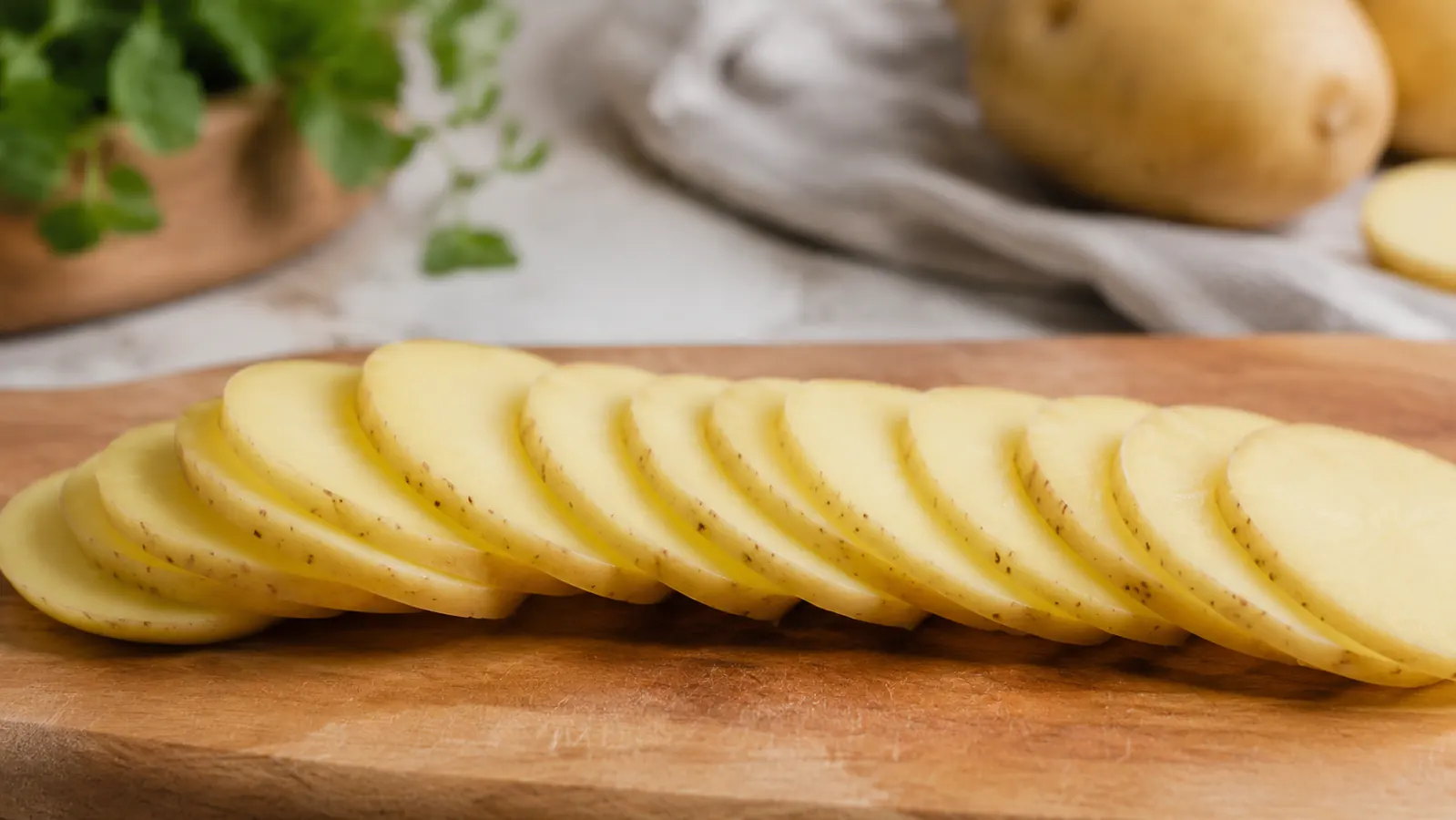
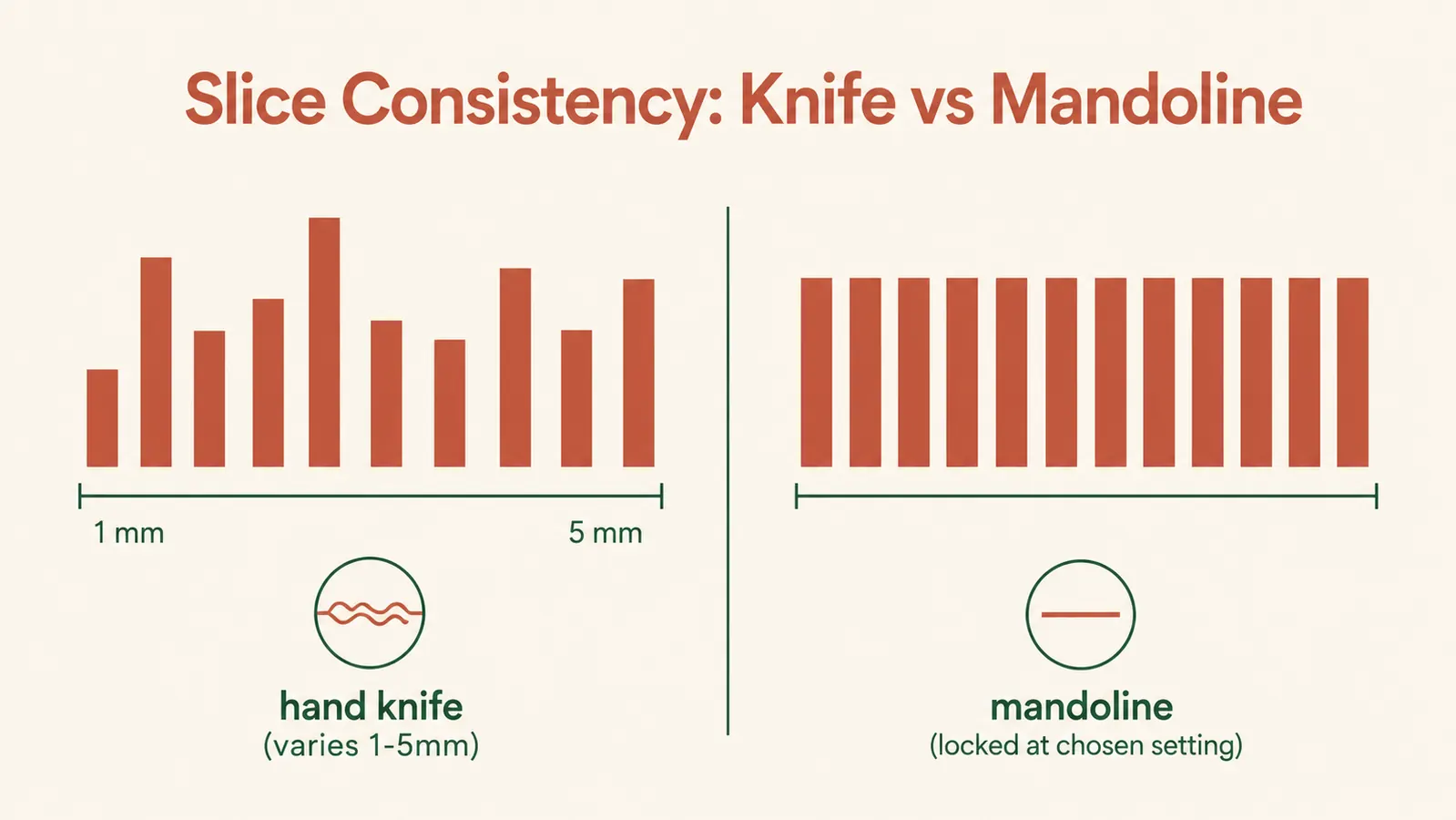
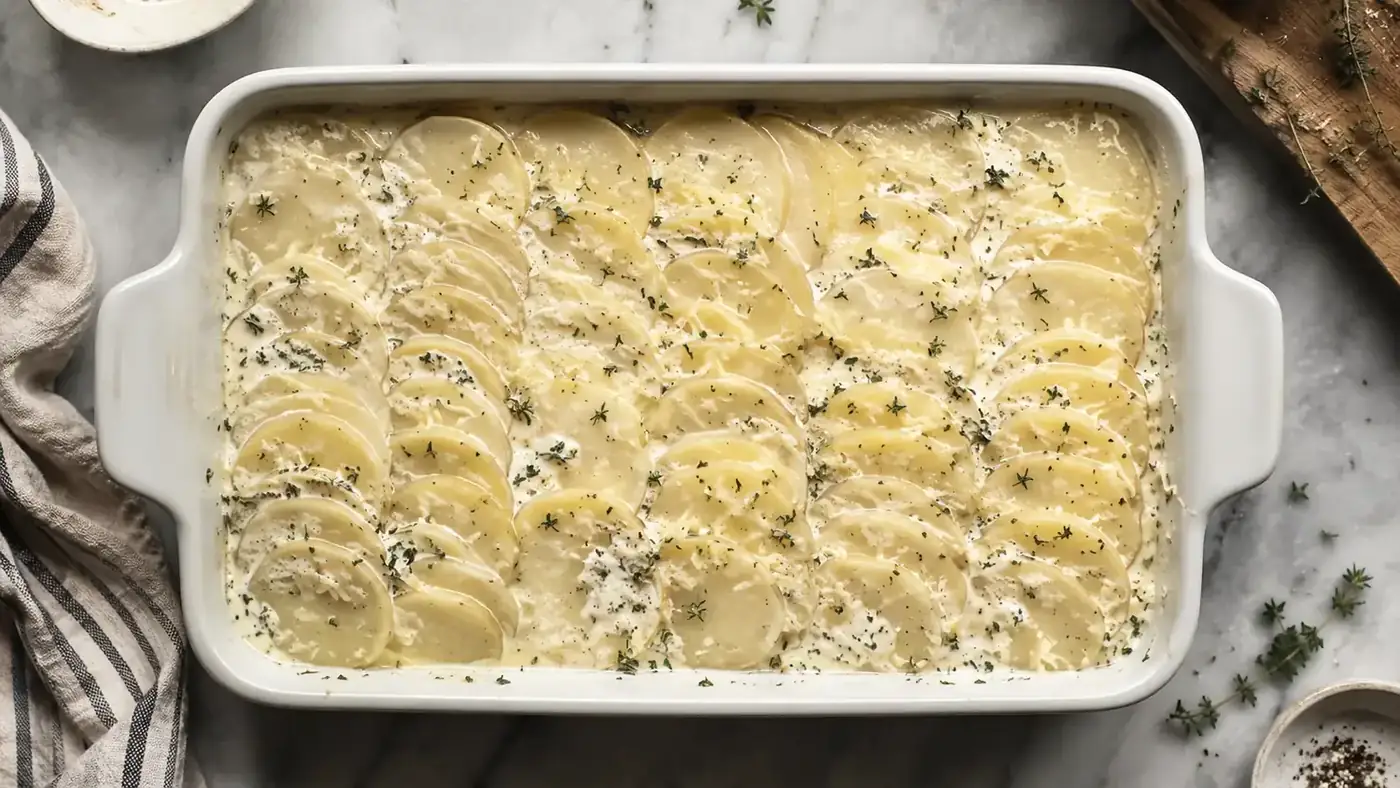
There's a specific kind of kitchen frustration that comes from pulling a potato gratin out of the oven and finding the edge pieces burnt to leather while the center is still crunchy. It's not your oven's fault, and it's not a recipe problem. It's a thickness problem. If some slices are twice as thick as others, they can't possibly finish cooking at the same time, no matter how careful you were with the temperature. I ran into this over and over with a chef's knife before I finally admitted the problem wasn't my knife skills. It was that no human hand can hold a blade at the exact same angle, at the exact same depth, forty times in a row.
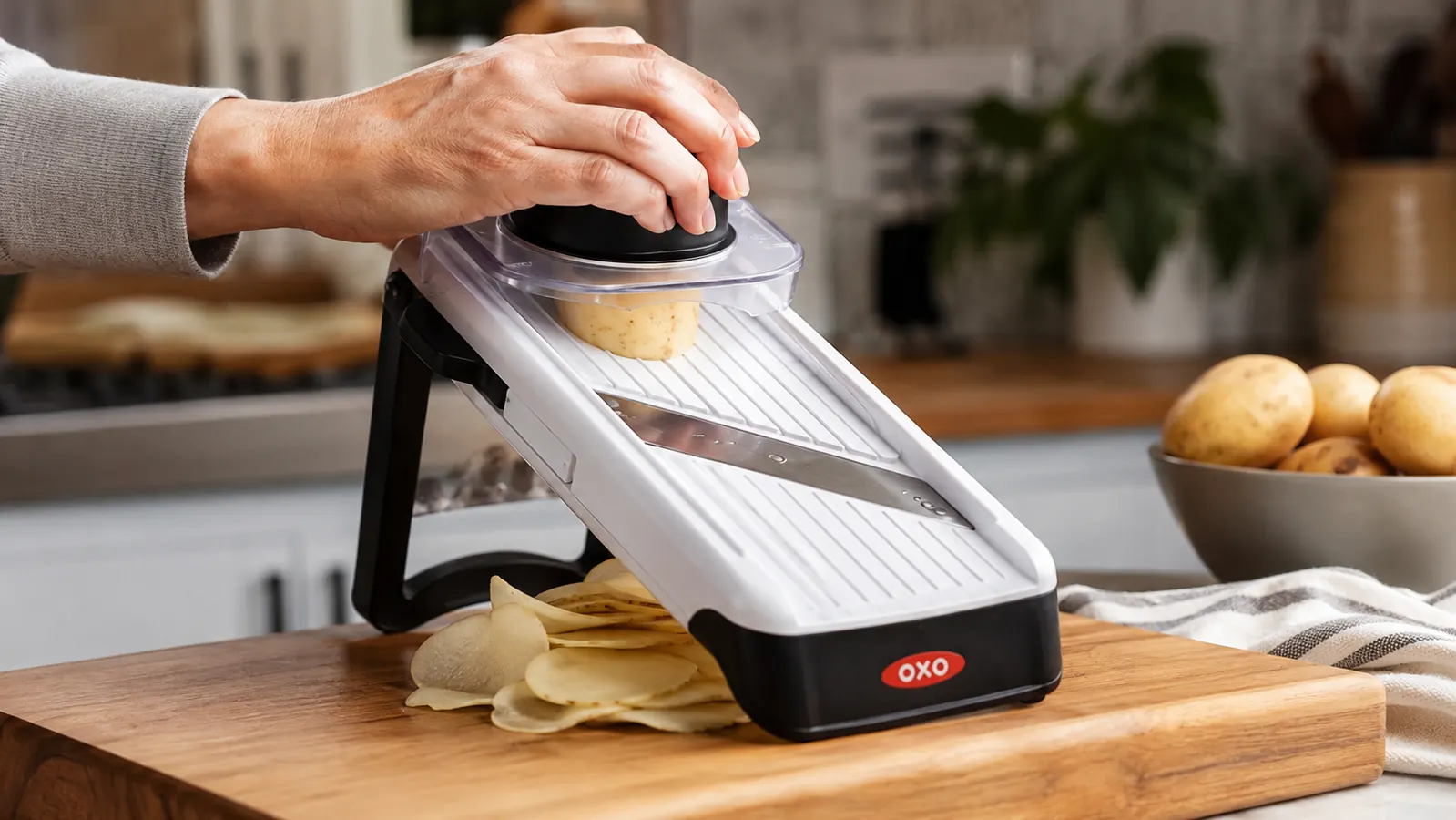
The fix turned out to be simpler than I expected. I picked up an OXO Good Grips handheld mandoline slicer, the kind with an adjustable blade you dial to a set thickness, and it turned inconsistent knife work into something closer to a machine setting. Every slice comes out the same because the blade never moves once you've locked it in. This guide walks through the five steps that take you from a pile of whole vegetables to a stack of evenly, consistently sliced ones, plus the safety habit that matters more than any of the others.
Stop Guessing at Slice Thickness With a Knife
The OXO Good Grips Mandoline Slicer locks in one exact thickness setting and repeats it on every single slice, so your potato gratin, onion rings, or cucumber salad all cook and taste the same from edge to center.
Amazon Check Today's Price on Amazon →Step 1: Pick the Blade Setting Before You Touch a Vegetable
The single biggest mistake I see people make with a mandoline is jumping straight to slicing without deciding what they're actually making first. The OXO has a dial on the side that adjusts blade depth from paper-thin, close to a sixteenth of an inch, up to about a quarter inch for something like thick-cut fries or hearty vegetable chips. Potato gratin wants thin, close to the thinnest setting, so the layers cook through evenly and soften into that custardy texture instead of staying firm in the middle. Onions for a quick pickle or a burger topping want something a little thicker, enough that they hold their shape and crunch instead of turning to mush.
Set the dial before you pick up the first piece of produce, and don't change it mid-batch unless you want two different thicknesses in the same dish. That sounds obvious written out, but it's the step people skip when they're in a hurry, and it's the reason half a batch of chips comes out crisp while the other half stays soft. A minute spent dialing in the right setting saves you from an uneven dish twenty minutes later.
If you're not sure what thickness a recipe wants, err thinner rather than thicker for anything going in the oven, like a gratin or a vegetable tian, and err slightly thicker for anything eaten raw, like a cucumber salad or slaw, so it holds some bite. You can always run a second pass at a different setting for a garnish if you want variety, but keep each batch consistent within itself.
Step 2: Trim and Square Off the Vegetable Before You Slice
A mandoline slices in a straight, flat pass, so it works best against a flat surface. Round vegetables like potatoes and cucumbers want a small flat edge sliced off one side first, just enough that the piece sits steady on the blade platform instead of rocking side to side as you push it through. I learned this the hard way with a whole, unpeeled potato that wobbled on the first pass and came out with a slice twice as thick on one end as the other.
For onions, cut the vegetable in half through the root end first, then slice with the flat cut side down against the platform. That flat surface is what keeps every layer moving through the blade at the same rate. For long vegetables like zucchini or carrots, trim the ends square so you're not wasting the awkward rounded tip trying to force a slice out of it.
Peeling is optional and comes down to preference and the recipe, but if you are peeling, do it before you slice, not after. It's a lot easier to run a peeler over a whole potato than to try to trim skin off a stack of paper-thin slices once they're already cut.
Step 3: Use the Hand Guard Every Single Time, No Exceptions
This is the step that matters more than the other four combined. A mandoline blade is exposed and it does not dull the way a kitchen knife does over months of use. It's sharp enough on day one to take a fingertip off in a fraction of a second if your hand slips past the platform, and it happens fast enough that you often don't feel it until you see it. The OXO comes with a food holder, a plastic hand guard with small prongs that grip the vegetable, and its entire job is to keep your fingers a safe distance above the blade at all times.
Use it on every pass, even on the last small stub of vegetable that feels too little to bother with. That last inch or two is exactly when people set the guard aside because it feels awkward to grip such a small piece, and it's exactly when accidents happen. If a piece gets too small to hold safely with the guard, stop, set it aside for the soup pot or the compost, and don't try to squeeze one more slice out of it by hand. A slightly wasted end piece costs you nothing. A trip to urgent care costs you your whole evening.
It's also worth keeping a cut-resistant glove on your non-slicing hand if you're doing a large batch, especially onions, where your eyes are watering and your grip isn't as sharp as it usually is. I keep one in the drawer right next to the mandoline itself so I'm not hunting for it mid-recipe. Slow down when you're tired or distracted. More mandoline injuries happen at the end of a long prep session than at the beginning, when the job feels routine and attention starts to drift.
Step 4: Slice With a Steady, Even Push, Not Speed
Once the blade is set and the guard is holding the vegetable, the actual slicing motion is the easy part, but it still helps to do it right. Push straight down and through in one smooth, continuous motion rather than sawing back and forth. A mandoline blade doesn't need sawing the way a dull knife does. One firm, steady pass gives you a clean slice with a smooth edge, while a hesitant, choppy push can tear the vegetable or leave a ragged cut.
Keep a consistent rhythm and pressure from the first slice to the last. It's tempting to speed up once you find your groove, especially on a big batch of potatoes for a holiday dinner, but rushing is when the pressure changes slice to slice and thickness starts drifting again, the exact problem you bought the mandoline to solve. Slow and steady beats fast and sloppy every time here.
Let the slices fall onto a cutting board or directly into a bowl of cold water if you're working with potatoes, which keeps them from browning while you finish the rest of the batch. For onions, I like slicing directly over a bowl so the strong-smelling layers don't sit exposed on the counter any longer than they have to. Either way, keep your slicing surface clear and stable so you're never reaching over a pile of finished slices to make the next pass.
Step 5: Rinse It Right After Use, Before Anything Dries On
The last step isn't about the slicing itself, it's about making sure you'll actually reach for the mandoline the next time a recipe calls for even slices instead of dragging out the knife because cleanup feels like a hassle. Rinse the blade and platform under running water immediately after you finish slicing, before starch from potatoes or sugar from onions has a chance to dry and stick. A quick pass with a dish brush, not your bare hand anywhere near that blade, clears it in under a minute.
The OXO breaks down for storage with the blade guard snapped in place, so it tucks flat into a drawer instead of taking up shelf space standing upright. I keep mine in the drawer right next to my everyday knives now, which sounds small but has made a real difference in how often I actually use it. When a tool is buried in the back of a cabinet behind the stand mixer, it doesn't matter how good it is, it just doesn't get pulled out.
If you're slicing something sticky or starchy in a big batch, like a full bag of potatoes for a crowd, give the blade a rinse partway through too, not just at the end. Buildup on the blade edge can start dragging slightly on later slices, which is a small thing but it's the kind of small thing that undoes all the consistency you worked for in the first four steps.
What Else Helps
A few extra habits round out the whole setup once the slicing technique itself is solid. A large, stable cutting board underneath the mandoline platform keeps everything from sliding around on the counter, especially if your countertop is a smooth stone or laminate. Some mandolines, including the OXO, have small rubber feet or a grip base for exactly this reason, but a board underneath still helps on slicker surfaces. A bowl of cold water for potatoes prevents browning while you finish a big batch, and it also rinses off surface starch, which helps a gratin or a pan of hash browns crisp up better in the oven or skillet instead of turning gummy.
If you're new to mandolines in general, practice the motion once or twice on a cheap vegetable you don't mind wasting, like an extra onion or a russet potato, before you commit to slicing something for company. It takes almost no time to get a feel for the right amount of pressure, and it's better to find that rhythm on a throwaway piece than halfway through prepping for a holiday meal with people due to arrive in twenty minutes.
A mandoline doesn't make you a better cook. It just removes the one variable a knife can never fully control: thickness.
Even Slices, Every Time, Without the Knife-Skills Learning Curve
The OXO Good Grips Mandoline Slicer takes the guesswork out of potato gratins, onion rings, cucumber salads, and vegetable chips. Set the dial once and every slice matches, no practice required.
Amazon See Current Price and Availability →