
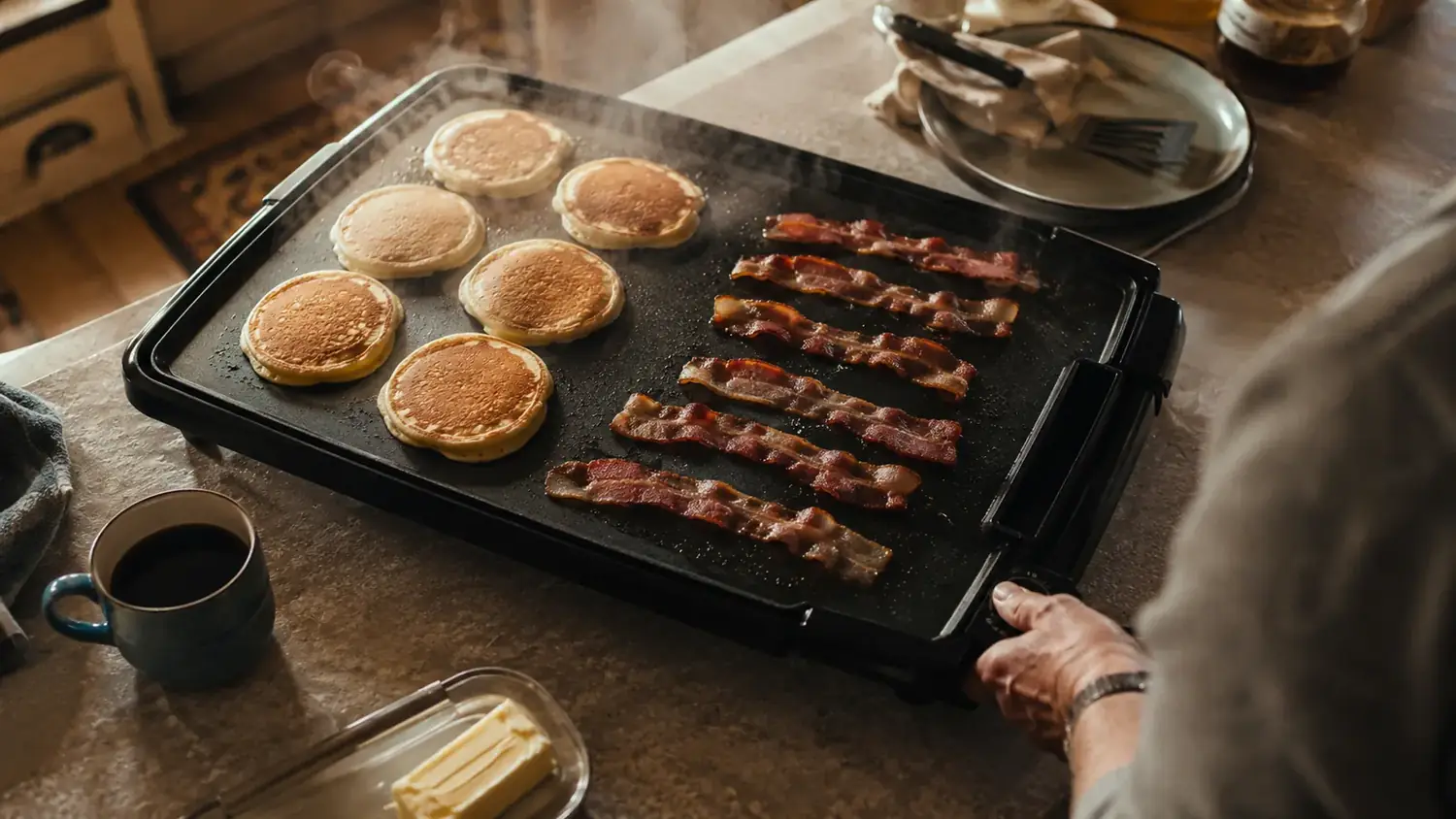
I want to get something out of the way before we go any further. I am not going to tell you this griddle is perfect, because it isn't, and if a review tells you a countertop appliance is flawless, that review is trying to sell you something rather than tell you the truth. What I can tell you is that I bought the Presto 22-Inch Electric Griddle for one very specific reason: my Sunday breakfast crowd had grown from four people to eleven, and my old ten-inch skillet was not going to cut it anymore.
So this is the review I wish someone had written for me. Not the glowing five-star blurb, and not the one-star rant from someone who clearly ran it wrong. Just the plain version, the one that tells you what surprised me, what annoyed me, and what I'd tell a neighbor over the fence if they asked whether to buy it.
The Quick Verdict
A genuinely large, easy-to-clean griddle that cooks well once you learn its quirks, but the temperature dial runs hotter than it reads and the edges cook noticeably slower than the center.
Amazon Check Today's Price →Big breakfast crowd, small countertop patience? This is the griddle that ends the pancake relay.
Twenty-two inches of nonstick surface means everyone eats at the same time, not in shifts. See today's price and current availability on Amazon.
Amazon Check Today's Price on Amazon →How I've Used It
I've had this griddle in regular rotation for a little over two months now, which isn't a lifetime, but it's enough time to move past the honeymoon phase where every new gadget feels like a miracle. I've run it for pancake mornings, grilled cheese lunches, a full batch of smash burgers for a backyard cookout, and one memorable attempt at breakfast quesadillas that taught me exactly where the hot spots are.
I didn't just plug it in once and write about the box. I timed the preheat with a kitchen timer on three separate mornings. I checked the actual surface temperature with an infrared thermometer gun my son-in-law Mark left at my house after a grilling project. And I ran it dirty, meaning I let bacon grease and pancake batter sit on it the way a real Tuesday morning goes, not the way a product photo goes.
That's the context for everything below. I'm not describing a griddle I unboxed and admired. I'm describing one that's earned a permanent spot on my counter, cord wrapped and ready, because it gets used at least four times a week. And that repeated use matters here, because a lot of the quirks I'm about to walk you through only show up after you've cooked on it enough times to notice a pattern, not after one photogenic breakfast.
I also asked two neighbors who own the same griddle whether they'd noticed the same things I had, mostly because I didn't want to write up a fluke and call it a review. Both of them, without prompting, mentioned the same edge-cooking issue I'll get into below, so I don't think mine is a defective unit. I think it's just how this design behaves, and that's useful information whether you end up buying it or not.
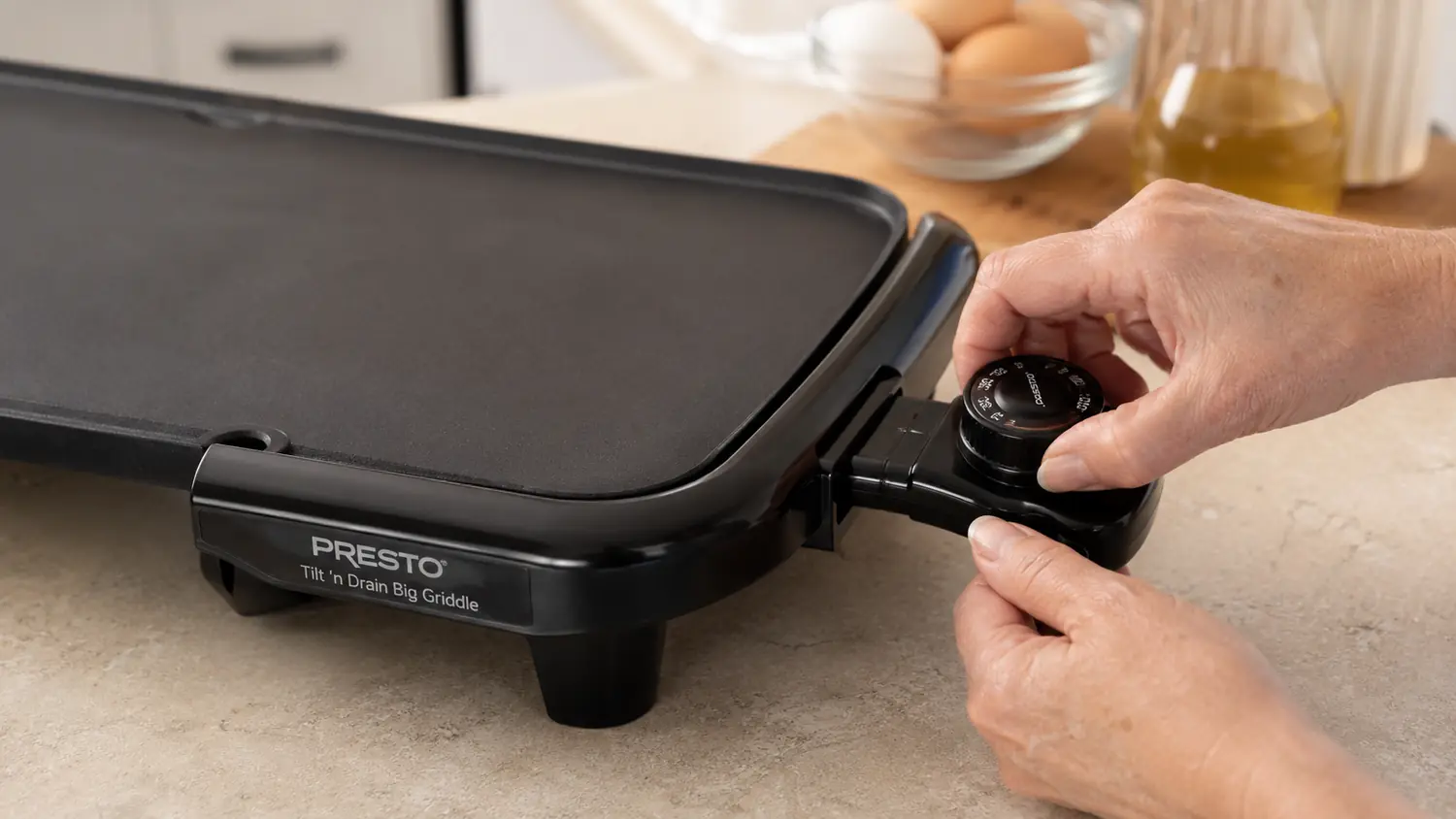
The Temperature Dial Runs Hotter Than It Reads
Here's the thing nobody mentioned in any review I read before I bought this. The removable probe control has numbers on it, but they are not gospel. I set mine to 325 for pancakes the first morning, the setting I use on every griddle I've ever owned, and the edges of my first batch scorched before the centers had bubbled. My infrared thermometer confirmed it: at the 325 mark, the center of the plate was reading closer to 365 degrees.
This isn't a defect exactly, more of a calibration quirk that seems common on this model based on comments I've seen from other owners. Once I knew to dial it back about twenty-five degrees from whatever a recipe called for, the results got a lot more consistent. But that's a trial-and-error lesson you shouldn't have to learn with a ruined batch of Sunday pancakes, so consider this your shortcut.
The dial also has a satisfying click at the low and medium settings but gets mushy near the high end, where the numbers are packed close together. If you're the type who eyeballs settings instead of reading exact numbers, give yourself an extra minute of attention around the 400-degree mark specifically, since that's where a small twist of the wrist swings the actual heat by more than you'd expect.
My workaround now is boring but reliable. I set the dial to 300 for pancakes and eggs, 375 for bacon and sausage, and 425 for smash burgers, and I ignore whatever number the recipe or the manual suggests. Once you build your own personal cheat sheet like that, the guessing stops and the results get repeatable, which is really all any of us actually want from a kitchen tool.
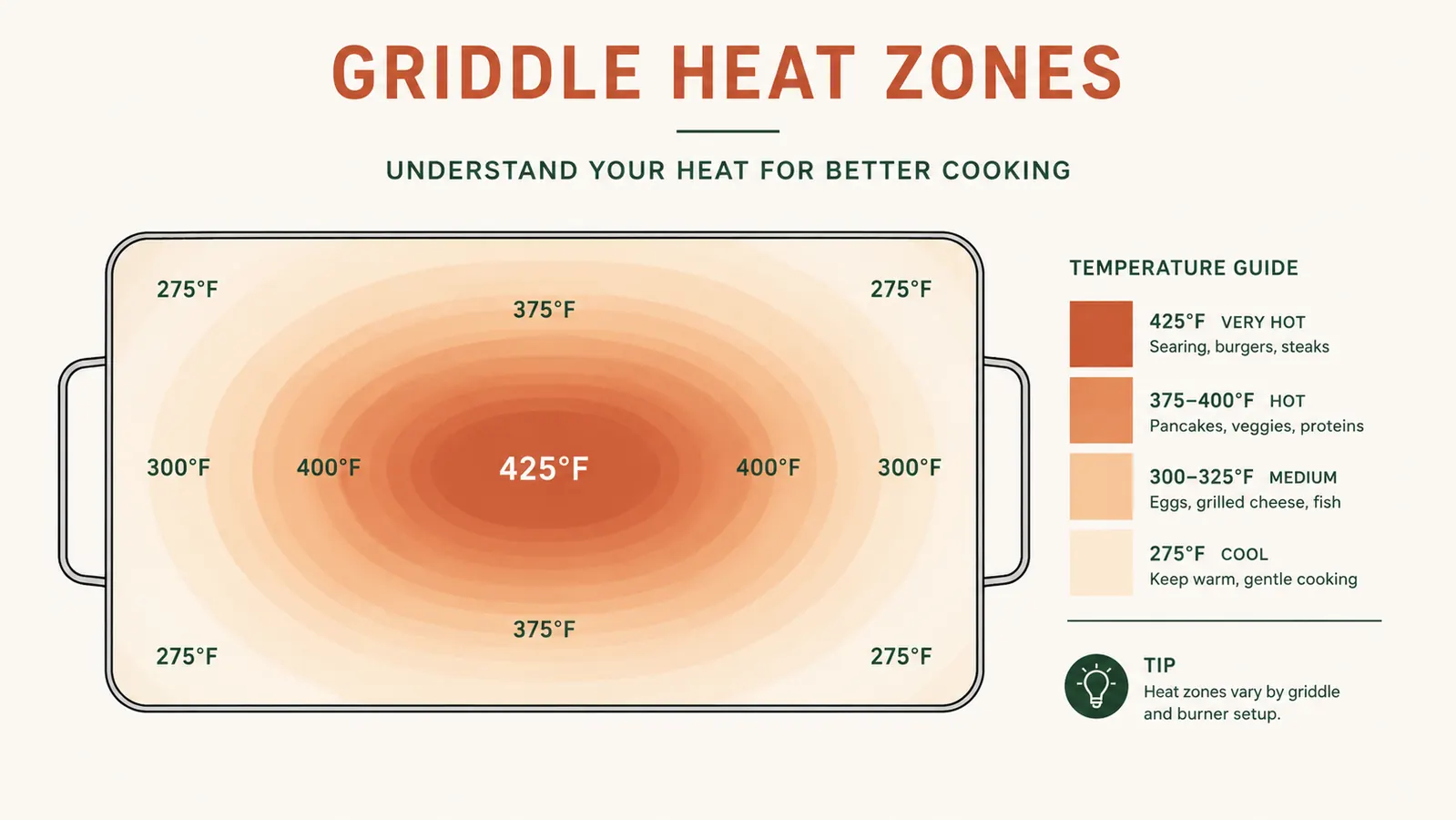
The Edges Cook Slower Than the Center, and That Changes How You Load It
This is the part of the honest review that took me the longest to figure out, and it's the reason my chart above shows a heat map rather than a flat green rectangle. The center third of the griddle heats fast and holds steady. The outer two inches on all sides run noticeably cooler, probably fifteen to twenty degrees by my thermometer's reading.
For eggs and bacon, this barely matters, since you're moving food around anyway. For pancakes, it matters a lot. My first two batches had a golden-brown center row and a pale, slightly gummy edge row, because I was pouring batter edge to edge like the surface was uniform heat. The fix was simple once I understood the problem: I load the center two-thirds first, let those cook through, then use the outer zone as a warming shelf for finished food rather than an active cooking zone.
If you're cooking for a crowd, this uneven zone means your real usable cooking surface is closer to sixteen inches than the full twenty-two advertised. Still plenty for most families, but worth knowing before you plan a twelve-person pancake assembly line around the full footprint. I now think of the outer ring the same way I'd think of the cool side of a charcoal grill, useful for holding food at temperature, not for actually finishing it.
Cleanup, Realistically
Every review promises easy cleanup, so let me tell you what that actually looks like at my house on a Sunday morning with eleven people fed and a sink already full of coffee mugs. I unplug the griddle, let it cool for about fifteen minutes, then wipe the surface with a paper towel while it's still slightly warm, which lifts most of the loose grease before it has a chance to set.
After that, a soft sponge with warm soapy water handles anything left behind, including dried pancake batter and stuck cheese from a grilled cheese lunch. I have not needed a scraper once, and I have not seen the surface scratch, even with the metal spatula I occasionally forget and grab out of habit. That said, the base unit with the heating element is not something you can submerge, so you're wiping that part down rather than washing it, and if you're the kind of cook who likes to run everything under the faucet, that's a genuine adjustment.
The drip spout I mentioned in the pros section deserves one more honest note. It works well for bacon and sausage grease, which is thin and flows easily. It works less well for something like ground beef fat from smash burgers, which cools and thickens fast and tends to clump near the spout rather than draining all the way through. I've started tilting the whole unit slightly with a folded towel under the far corner when I'm doing a big burger batch, and that solves it, but it's an extra step nobody mentions in the manual.
One more small thing worth flagging. The area right around the drip spout stays a little greasy looking even after a wipe-down, simply because that's where everything funnels on its way out. I keep a dedicated rag just for that corner now instead of using my good dish towels, and that's solved the mild annoyance of finding a grease spot on laundry day.
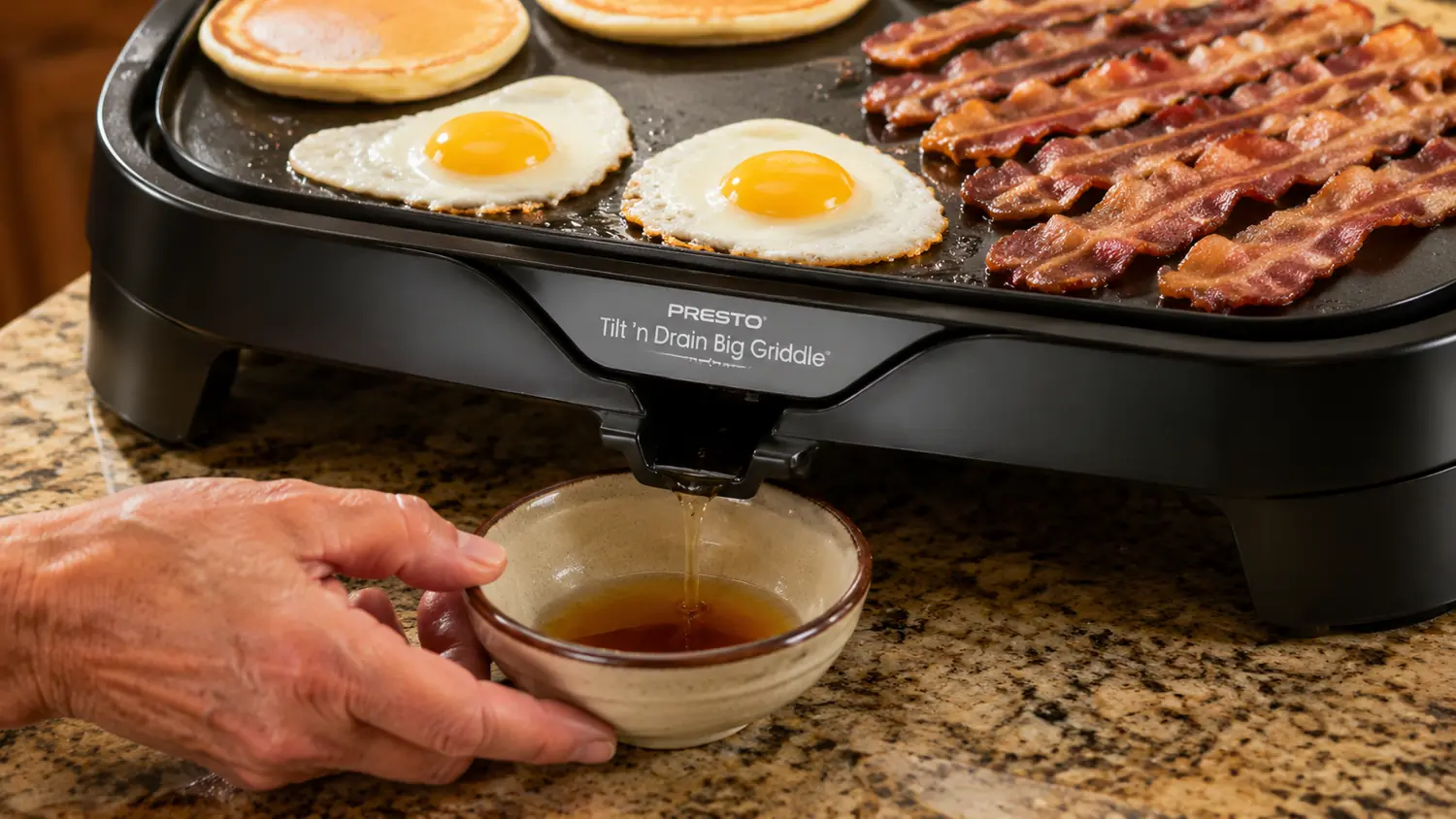
What Actually Impressed Me
I don't want this to read like a takedown, because there's a lot here that works better than I expected for the money. The nonstick ceramic surface has genuinely not needed oil or butter for eggs or pancakes, even two months in with regular use. I scrub it with a soft sponge and warm water, and that's it. No scraping, no soaking, no special cleaner.
The drip spout is a small detail that turned out to matter more than I expected. There's a slight tilt built into the cooking surface toward one corner, and grease from bacon or sausage runs off into a small catch cup instead of pooling. It's not a dramatic slope, you won't notice it by looking, but you'll notice the difference in cleanup.
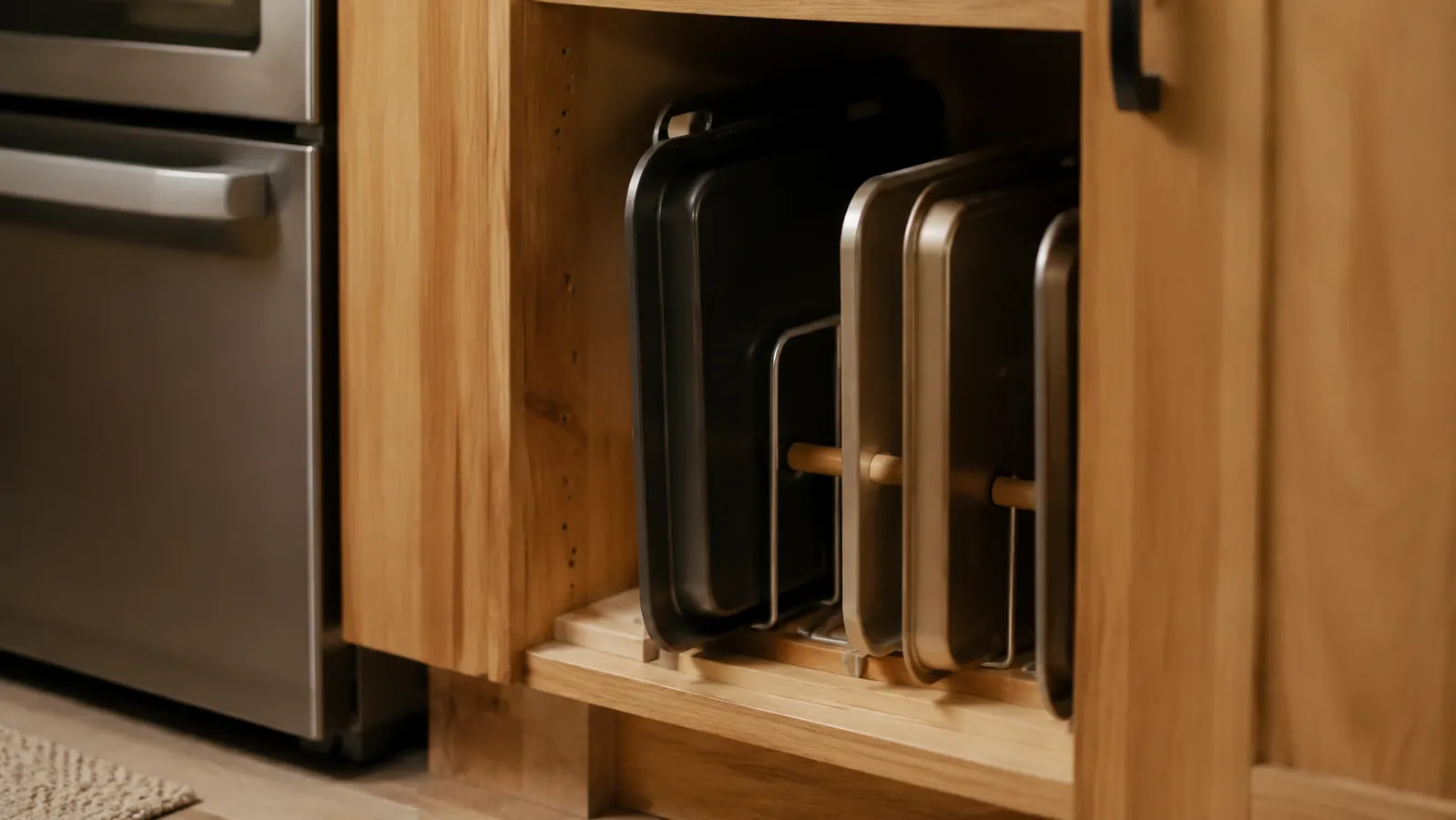
I also like that the handles pop off. It sounds minor until you're trying to fit a griddle into a dishwasher-adjacent sink or a cabinet with a shallow shelf. Mine stores standing on its side in a gap next to my baking sheets, and it wouldn't fit there at all with the handles locked in place. Whoever designed that detail was clearly thinking about people with normal-sized kitchens, not a magazine photo shoot with unlimited counter space.
The preheat speed also surprised me. Most mornings it's ready for the first pancake in under five minutes from a cold plug-in, which matters more than you'd think when you've got grandkids circling the kitchen asking when breakfast is ready. My old griddle took closer to ten, and that difference adds up over a busy holiday weekend.
What I Liked
- Cooks two-thirds of the surface evenly, plenty for most families
- Ceramic nonstick has held up two months with zero flaking or scratching
- Removable handles make storage and cleanup much easier
- Drip spout genuinely reduces grease pooling on thin liquids like bacon fat
- Preheats in under five minutes on my kitchen timer
Where It Falls Short
- Temperature dial reads hotter than the actual surface, expect to dial back
- Outer two inches cook noticeably slower, shrinking your real usable space
- Cord is on the short side if your outlet isn't right behind the counter
- No indicator light to tell you when it's actually at temperature
- Drip spout clogs on thicker fats like ground beef unless you tilt the unit
The real usable cooking surface is closer to sixteen inches than the full twenty-two, and once I stopped fighting that, breakfast got a lot easier.
How It Compares to What I Used Before
For years I cooked breakfast on a well-worn cast iron skillet that belonged to my mother, and before that a basic ten-inch nonstick pan from a box store. The cast iron gave better, more even heat once it was properly warmed, no argument there, but it took twenty minutes to get hot and another twenty to cool and dry properly, and it only ever fed three or four people before I was starting a second batch.
The Presto trades a little bit of that even-heat precision for sheer capacity and speed, and for my household, that trade is worth it. I'm not chasing restaurant-quality browning, I'm trying to get pancakes, eggs, and bacon in front of eleven hungry people inside twenty minutes without three separate pans going at once. On that specific job, this griddle beats everything I've cooked on before, cast iron included.
Who This Is For
If you're feeding four or more people breakfast on a regular basis and you're tired of the pancake relay, where the first person eats cold food while the last batch is still on the stove, this solves that problem. It's also a smart pickup if you host holiday breakfasts once or twice a year and don't want to buy a full commercial flat top just for those mornings. The ceramic surface makes it forgiving for anyone who doesn't want to babysit seasoning the way you would with cast iron, which makes it a good fit for anyone who wants easy weeknight cooking without fussy maintenance.
Who Should Skip It
If you're cooking for one or two people most mornings, this is more griddle than you need, and a smaller nonstick pan will heat faster and store easier. If you're someone who wants precise, restaurant-grade temperature control for something like crepes or delicate fish, the dial's imprecision will frustrate you. And if counter space is genuinely tight in your kitchen, know that this thing is large even with the handles off. Measure your storage spot before you order, and check that your nearest outlet is within reach, because the cord is shorter than you'd expect on an appliance this size.
Now that you know exactly what you're getting, here's where to find it.
The quirks are minor once you know them going in. The size, the easy cleanup, and the preheat speed are what make this one worth keeping on the counter. Check today's price on Amazon before you decide.
Amazon Check Today's Price on Amazon →